Honghe Machinery
Honghe Machinery
Honghe Machinery
Complete precision solutions designed to integrate seamlessly with standard and custom resin glass polishing configurations.
Over 15 years of certified expertise driving efficiency, productivity, and world-class industrial surface finishing tools.
Established in 2008, Nanjing Honghe Glass Machinery Co., Ltd. has spent over a decade integrating professional R&D design, manufacturing excellence, global sales network distribution, and technical consultancies within the glass processing machinery sector. Strategically located in the industrially dynamic town of Qishi, Nanjing City, Jiangsu Province, the enterprise maintains close logistics proximity to major export shipping corridors.
Through a sustained commitment to technological innovation, Honghe has secured an array of national invention patents and independent intellectual property rights. By matching premium manufacturing tolerances with specialized design methodologies, we support fabricators worldwide in improving processing throughput and reaching strict compliance metrics.
In structural glass manufacturing, edge grinding is not merely an aesthetic step—it dictates the physical properties and structural resilience of the final product. Resin glass polishing wheels represent the critical final stage in abrasive edge processing. They utilize a synthetic resin bond matrix combined with precisely graded diamond or metal abrasives to remove surface micro-cracks, micro-chips, and edge imperfections generated during coarse grinding.
As glass transitions from cutting to grinding, diamond metal-bond wheels remove large stock volumes, leaving a rough micro-profile. Resin-bonded polishing wheels refine this profile, ensuring the glass edge transitions to a smooth, uniform, or high-gloss finish. This step is essential because unresolved micro-cracks on the edge concentrate thermal and physical stresses, which can lead to spontaneous breakage during tempering, heat soaking, laminating, or structural installation.
Information Gain Insight: The mechanical performance of a resin-bonded wheel depends on the thermal stability of its polymer formulation. Nanjing Honghe utilizes high-grade thermosetting phenolic and polyimide resin systems. This formulation resists localized friction-induced softening up to 250°C, maintaining consistent abrasive retention and preventing edge burns or surface chatter.
Leveraging domestic raw material integration, manufacturing efficiency, and direct logistics.
By locating production close to major synthetic diamond and structural polymer suppliers in the Yangtze River Delta, we maintain steady access to key raw materials. This proximity reduces sourcing delays and keeps material input costs stable.
Our facility utilizes automated hot-press molding machines and CNC post-molding balance calibration systems. Automated manufacturing ensures every batch of wheels matches exact dimensional tolerances, minimizing spindle vibration on your edging lines.
We operate as a direct factory and exporter, removing middleman markups. Our export logistics team coordinates customs clearance, container packing, and global freight delivery to keep lead times reliable for distribution partners.
Industrial buyers, factory managers, and procurement officers face constant pressure to optimize production lines. For glass processing plants running multi-spindle edgers (such as Bovone, Bottero, Bando, or glass double-edging machines), the total cost of ownership (TCO) of polishing consumables goes beyond the initial price per wheel. Key performance criteria include:
| Wheel Category | Standard Grit Range | Bond Configuration | Ideal Application Scenario | Target Surface Roughness (Ra) |
|---|---|---|---|---|
| Metal Bond Diamond Wheel | 80# - 240# | Sintered Bronze / Cobalt | Coarse grinding and bulk stock removal | 1.5 μm - 3.2 μm |
| Resin Bond Diamond Wheel | 240# - 600# | High-Temp Phenolic Resin | Fine edge grinding and bevel profiling | 0.4 μm - 0.8 μm |
| Resin Polishing Wheel | 800# - 3000# | Polyimide-Resin / Cerium Fill | High-gloss finishing and final edge polishing | < 0.1 μm |
| CE-3 / 10S Cup Wheels | Polishing Mix | Elastic Synthesized Polyurethane | Flat edge polishing (secondary / tertiary spindles) | Mirror Finish |
Engineered options tailored for diverse architectural, automotive, and technological glass processing requirements.

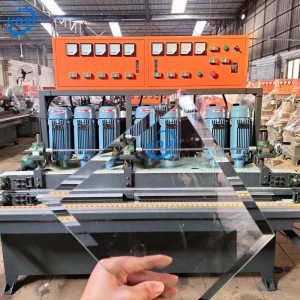
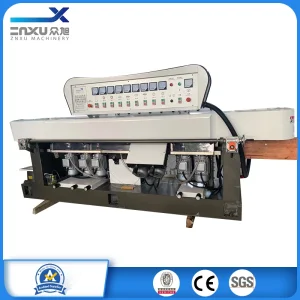
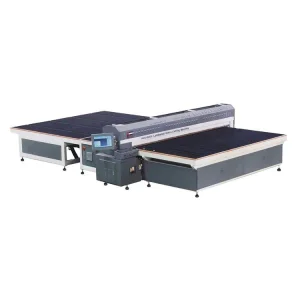
High-end glass cleaning, cutting, and grinding setups significantly improve the processing quality of structural glazing through precise automated edge control.
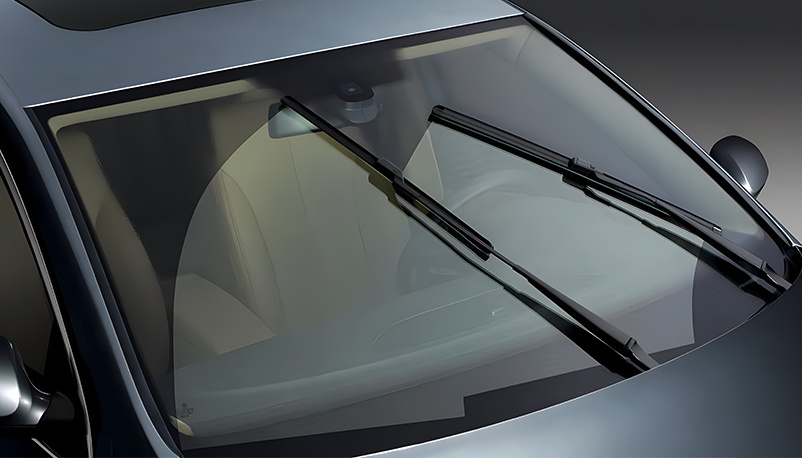
Our equipment and consumables support automotive edge polishing, cleaning, and digital printing preparation, helping operators reach high yields and throughput.

Engineered for solar panel glass production lines, optimizing throughput speed and maintaining consistent edge grinding tolerances under continuous runtime conditions.
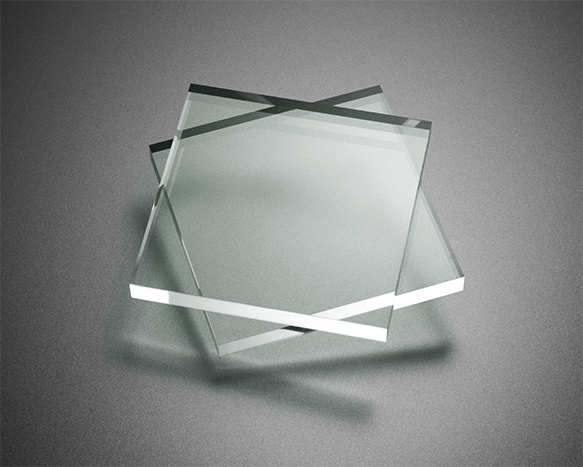
Polishing steps designed for low-E and metal-oxide coated glass surfaces, minimizing contact pressure to preserve the integrity of nearby functional coatings.
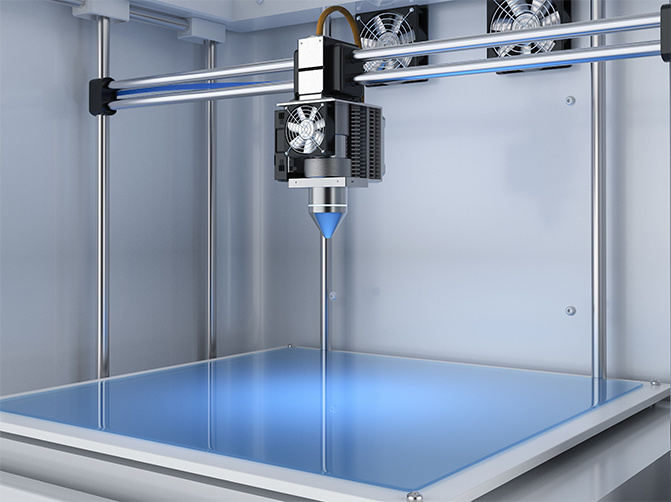
Ensures the clean edge finishes required for high-adhesion digital ink applications, reducing micro-fissure defects prior to printing and tempering steps.
The industrial glass sector is shifting toward higher processing automation and stricter quality standards. This evolution shapes the development of modern resin polishing wheels in three key areas:
Integrating Cerium Oxide directly into the resin matrix produces a chemical-mechanical polishing effect. This formulation provides high reflectivity and clarity on clear glass edges, especially at high processing speeds.
Advanced elastic resin systems allow the wheel to compress slightly under load. This flexibility absorbs minor glass misalignment or structural variations, preventing edge chipping and ensuring a uniform polish.
Geometric segment designs and internal cooling channels help clear abrasive debris and deliver water directly to the grind interface. This structural design keeps temperatures low, extending tool life.
Nanjing Honghe works to keep pace with these shifts by testing and refining polymer formulations and grain distributions. This direct engineering control helps distribution networks provide reliable solutions to glass processing facilities worldwide.
Ensuring international operational standards and reliable delivery schedules across global logistics routes.
All manufacturing runs adhere to ISO 9001 quality management processes. Our wheels undergo balance verification testing and comply with European EN13236 safety standards for superabrasive grinding wheels, helping operators maintain workplace safety.
We work with verified ocean freight lines, air express services, and customs brokers to provide end-to-end tracking. Direct factory shipments include complete documentation, certificates of origin, and custom HS code indexing to prevent clearing delays.
We provide remote engineering consultations to help align machine spindle speed, feed rate, coolant water pH, and wheel grit selection with the specific glass composition and edge geometry on your production lines.
Answers to common industry questions regarding resin glass polishing wheels.
Premature wear is typically caused by insufficient coolant flow, excessive feed pressure, or mismatched spindle speeds. When coolant flow is too low, localized temperatures at the grinding point can spike. This thermal stress breaks down the polymer binder, releasing the abrasive grains before they are fully worn. Keep coolant water directed at the contact zone and verify feed pressure remains within recommended limits.
The ideal progression depends on the type of glass processing line. For a standard multi-spindle inline edger, a common arrangement uses a 140# or 180# metal-bond wheel for initial stock removal, followed by a 240# or 320# resin-bond diamond wheel to remove coarse tool marks. The sequence concludes with a high-grit resin polishing wheel (800# to 1500#) or a polyurethane cerium wheel to achieve a clean finish.
Coolant water quality plays a significant role in edge consistency. Hard water can lead to mineral buildup on the wheel surface, causing the wheel to glaze. Water with high glass-powder suspended solids acts as an unwanted abrasive, wearing down the wheel binder prematurely. We recommend maintaining clean, recycled water or using settling agents and centrifugal filtration to keep solids below 1%.
Chipping is often caused by micro-fractures left by the previous metal-bond wheel that were not completely ground out. If the fine-grit resin wheel is set to remove too much material, or if the wheel is dynamically unbalanced, it can chip the edge. To resolve this, confirm the rough-grinding wheel is running true, adjust the second-stage wheel to remove sufficient stock, and ensure the polishing spindle is balanced.
Yes, but they require proper speed and feed adjustments. The heat generated during grinding can soften the plastic interlayer (PVB/EVA), causing it to gum up and load the wheel face. Once loaded, the wheel loses cutting efficiency, leading to friction spikes and potential glass breakage. Using a matrix with open pores, dropping feed speed by 15-25%, and increasing coolant volume help clear debris.
Every production batch undergoes runout checks and dynamic balance testing using computerized calibration systems. We also test sample wheels from each run under actual loads on our own glass processing equipment. This hands-on validation ensures the bond hardness and grit distribution meet our standard specifications before shipment.
Explore our machinery inventory to build a complete, balanced, and automated glass fabrication facility.