Honghe Machinery
Honghe Machinery
Honghe Machinery
Industrial Whitepaper: Next-Generation Motion Control, EtherCAT Architectures, and Automated Intelligence in Deep Glass Processing
Explore high-precision machinery solutions equipped with integrated control technology engineered for peak throughput, energy efficiency, and operational safety.
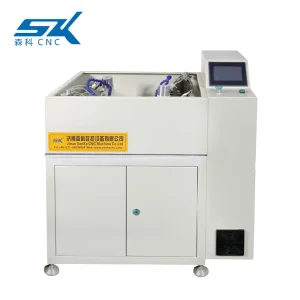
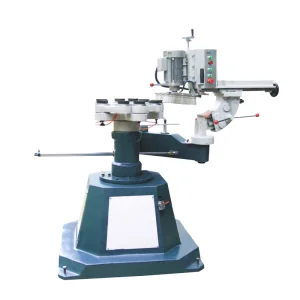
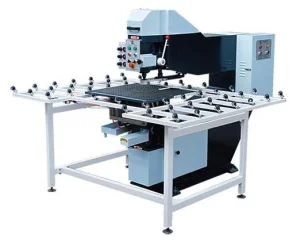
The global glass processing equipment industry is undergoing a structural paradigm shift driven by Industry 4.0 automation, microsecond-level synchronization demands, and stringent sustainability imperatives. Modern glass processing—spanning architectural insulating units (IGUs), automotive safety glass, ultra-thin photovoltaic (PV) substrates, and structural coated glass—requires control architectures capable of handling complex multiaxis dynamic trajectory interpolations while ensuring near-zero thermal distortion and zero surface scoring flaws.
At the center of this transformation is the Glass Machinery Control System. Moving away from traditional, isolated Programmable Logic Controllers (PLCs), the modern glass factory relies on real-time Industrial Ethernet communication protocols (primarily EtherCAT, PROFINET IRT, and POWERLINK), cloud-connected Edge Computing, and AI-driven predictive maintenance algorithms. Control systems now govern everything from precise servo tool pressure in linear cutting modules to complex heating profile zone controls in glass tempering furnaces.
Procurement directors and system integrators must evaluate equipment based on technology trajectories that safeguard production flexibility for the next 10–15 years.
Industrial PCs (IPCs) running real-time micro-kernels are rapidly replacing standalone hardware PLCs. IPCs allow complex numerical control (NC) algorithms, machine vision inspections, and SCADA connectivity to run on a unified, high-performance multi-core processing architecture without hardware latency bottlenecks.
In high-speed edge grinding and cutting, static cutting speeds lead to glass chipping or tool wear. Next-gen controllers utilize real-time dynamic torque feedback to automatically modulate cutting wheel pressure and rotational speed based on glass thickness and curvature radii.
Modern glass factories utilize multi-brand production lines. Native OPC UA (Open Platform Communications Unified Architecture) integration within the control software guarantees seamless vertical communication from field-level sensors up to Enterprise Resource Planning (ERP) and MES platforms.
An authoritative comparative review of world-leading automation manufacturers, turnkey system integrators, and specialized hardware/software developers for glass deep-processing machinery.
| Rank / Supplier | Primary Architecture | Core Domain Strength | Supported Communication Protocols | Target Machine Types |
|---|---|---|---|---|
| 1. Beckhoff Automation | TwinCAT PC-Based Control | Ultra-fast EtherCAT motion control, multi-axis CNC interpolation | EtherCAT, OPC UA, MQTT | High-speed CNC cutting, double-edgers, waterjets |
| 2. Siemens (Digital Industries) | SIMATIC S7-1500 / SINUMERIK | Integrated safety, massive ecosystem, industrial robustness | PROFINET IRT, PROFIBUS, OPC UA | Float lines, tempering furnaces, automated IGU lines |
| 3. Nanjing Honghe Glass Machinery | Customized Smart Automation IPC/PLC | Turnkey integration, high performance-to-cost ratio, specialized edge tooling | EtherCAT, Modbus TCP, CANopen | Double-side edgers, washing/drying, beveling machines |
| 4. Schneider Electric / Modicon | PacDrive 3 / EcoStruxure | Energy management, scalable robotics motion control | Sercos III, Modbus TCP, Ethernet/IP | Material handling, glass loading robots, sealing lines |
| 5. Omron Automation | Sysmac NJ/NX Controller | Integrated vision processing, AI-driven predictive control | EtherNet/IP, EtherCAT | Automotive glass edging, inspection, optical checking |
| 6. Mitsubishi Electric | MELSEC iQ-R Series | High reliability, precise servo positioning systems | CC-Link IE, SLMP | Horizontal glass cutting, drilling, batching control |
| 7. B&R Industrial Automation | Automation Studio / ACOPOS | Modular multi-zone temperature & tight trajectory motion control | POWERLINK, openSAFETY, OPC UA | Laminating lines, specialized glass bending furnaces |
| 8. Fanuc Corporation | Series 30i/31i-MODEL B CNC | Extreme precision mechanical pathing and robotic handling | FL-net, Ethernet/IP, PROFINET | Robotic glass seamers, complex 3D shape cutting |
| 9. Delta Electronics | PC-based Motion Controller MH300 | Cost-effective turnkey PLC+HMI hardware packages | EtherCAT, Modbus, DeviceNet | Auxiliary beveling, manual/semi-auto drilling units |
| 10. Yaskawa Electric | MP3000 Series / IEC Controllers | High-torque servo synchronization, low vibration drive control | MECHATROLINK-III, EtherCAT | Heavy-load glass transfer tables, high-speed edge polishers |
When selecting a control system supplier, enterprise buyers must balance Deterministic Speed (bus cycle times under 250 micro-seconds) with Software Maintainability. Systems engineered with non-proprietary IEC 61131-3 programming languages lower long-term technical debt and enable local plant engineers to troubleshoot without waiting for OEM software unlock keys.
A analytical matrix designed for Chief Technical Officers (CTOs) and Procurement Heads to calculate total cost of ownership (TCO) over a 10-year machine operational lifecycle.
Covers IPCs, IO modules, servo drives, human-machine interface (HMI) touch panels, and safety relays. Standardized off-the-shelf control components reduce initial investment while preventing single-source lock-in.
Pre-configured motion libraries for glass cutting optimization (nesting algorithms) and edge grinding path compensation significantly cut system commissioning time from weeks to days.
Regenerative servo drives return excess kinetic energy from decelerating heavy glass sheets back into the factory grid, reducing line-wide electrical power draw by up to 18-22% annually.
Tailored glass processing control architectures customized to meet the distinct engineering tolerances of varying industrial sectors.
High-end glass cleaning and drying machines significantly improve the efficiency and quality of architectural glass processing through automation and intelligent technology.
Integrated control systems maintain constant temperature and pressure regulation in washer drying knives, guaranteeing zero water residue prior to low-E coating or laminating steps.

Honghe's intelligent manufacturing solutions have been implemented in glass edge grinding, glass cleaning, digital printing glass cleaning, and architectural glass processing, receiving customer praise for their superior product qualification rate and per capita efficiency.
Automotive solutions require high multi-axis CNC synchronization to handle complex 3D spherical curvature edging and precision antenna printing verification.
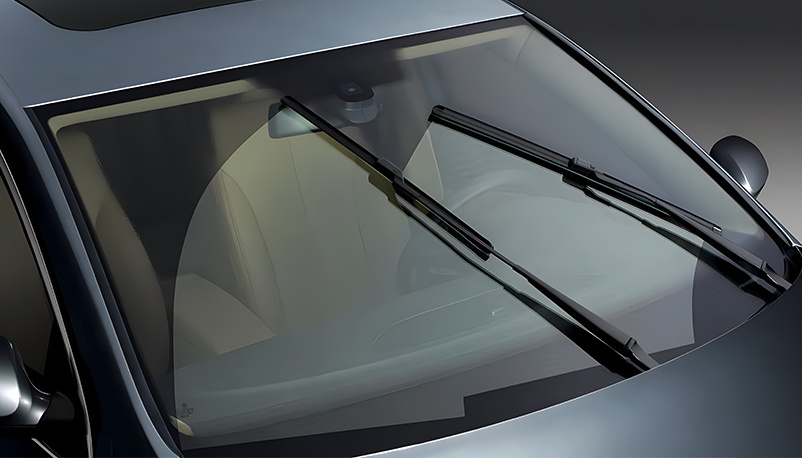
Honghe's intelligent manufacturing solutions have been implemented in glass edge grinding, glass cleaning, digital printing glass cleaning, and architectural glass processing, receiving customer praise for their superior product qualification rate and per capita efficiency.
High-throughput PV solar line controls manage continuous 24/7 high-speed conveyances with low glass breaking rates on ultra-thin 1.6mm–2.0mm textured glass sheets.

Honghe's intelligent manufacturing solutions have been implemented in glass edge grinding, glass cleaning, digital printing glass cleaning, and architectural glass processing, receiving customer praise for their superior product qualification rate and per capita efficiency.
Features touchless pneumatic flotation transfer systems controlled via dynamic optical sensors to protect soft metallic magnetron sputters from mechanical contact abrasions.
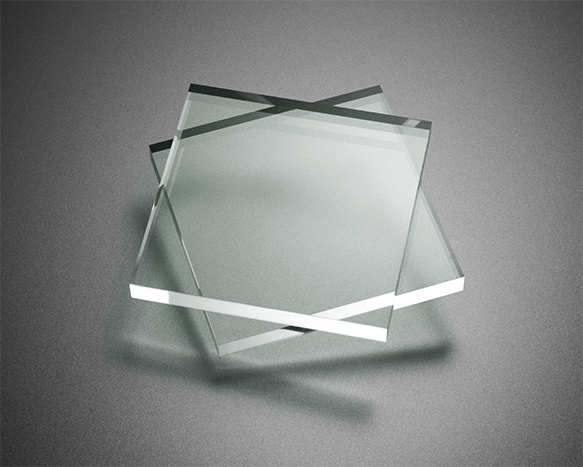
Honghe's intelligent manufacturing solutions have been implemented in the fields of glass edge grinding, glass cleaning, digital printing glass cleaning, and architectural glass processing, receiving customer praise for their superior product qualification rate and per capita efficiency.
Incorporates optical registration cameras that sync micro-drop inkjet heads with real-time encoder pulses to achieve high-resolution ceramic glass printing.
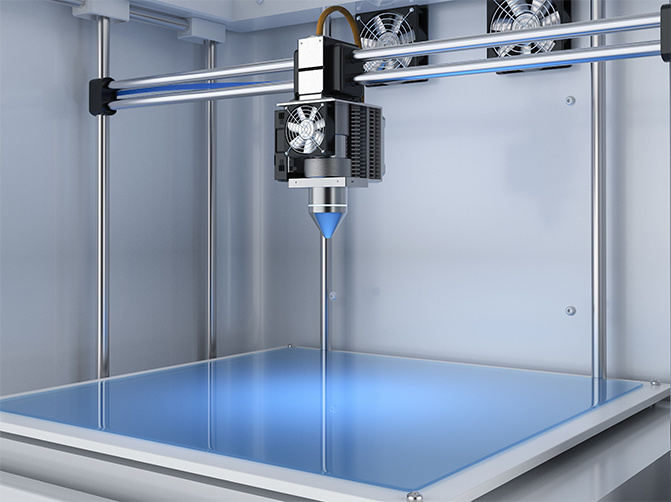
Nanjing Honghe Glass Machinery Co.,Ltd. is established in 2008 and integrating R&D design production sales and technical services of glass deep processing machinery. The company is located in the economically developed Qishi Town Nanjing City, Jiangsu Province.
Since its inception, Honghe has been recognized by industry organizations and government authorities. After years of accumulation and continuous innovation Honghe has a number of national invention patents and independent intellectual property rights and the research and development level has achieved fruitful results.
With custom-engineered control software, rigorous assembly protocols, and real-time remote engineering assistance, Nanjing Honghe continues to drive the automation standards for glass edging, washing, cutting, and specialized automotive glass processing equipment globally.
Industrial machinery operating in international markets must comply with stringent electrical, mechanical, and cybersecurity regulatory frameworks.
Control cabinets must satisfy low-voltage directives (LVD) and electromagnetic compatibility (EMC) standards. Standardized wire color coding, dual-channel emergency stop circuits, and finger-safe IP20 terminal blocks are mandatory for European deployment.
For installations across the United States and Canada, industrial control panels (ICPs) require short-circuit current ratings (SCCR) labeling, branch circuit protection, and UL-certified enclosures to clear local field inspector sign-offs.
As control systems connect to enterprise cloud networks, hardware controllers must support encrypted VPN tunnels, port security, role-based access control (RBAC), and secured firmware signature verification to protect against malware targeting industrial networks.
Key technology advancements that will define the next decade of intelligent flat glass and structural processing automation.
Virtual commissioning via Digital Twins allows operators to simulate complex toolpaths and stress load points on glass sheets prior to actual cutting or grinding, cutting line setup phase errors to absolute zero.
Deep-learning micro-vision cameras mounted directly on grinding spindles analyze glass edge micro-cracks in real time, auto-adjusting feed rates and grinding wheel height without halting the production line.
Closed-loop predictive thermal algorithms in tempering furnaces dynamically switch heating element power outputs based on real-time glass emissivity measurements, slashing electrical waste.
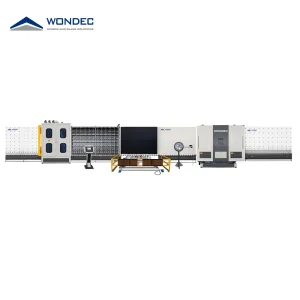
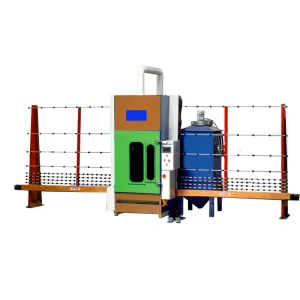
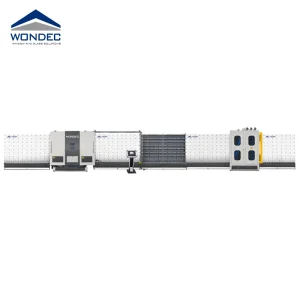
Select high-performance processing machinery integrated with advanced control systems for beveling, frosting, insulating assembly, and laser coding.
Expert technical answers addressing real-world integration, maintenance, and specification challenges in glass machinery control systems.