In the glass production industry, reliance on manual labor can create inefficiencies. This dependency often leads to increased costs and production delays. To enhance productivity and profitability, manufacturers must explore innovative strategies. Many companies are seeking ways to reduce labor dependency in glass production lines.
Automation can play a significant role in this transformation. Advanced machinery helps streamline processes, reducing the need for human intervention. However, implementing new technologies can be challenging. Workers may resist change, fearing job loss. Addressing these concerns is essential for a successful transition.
Moreover, training programs can empower employees to adapt to automated systems. This investment can minimize resistance and foster a collaborative environment. Ultimately, the goal is to balance human skills with technological advancements. By doing so, businesses can achieve greater efficiency and sustain growth in a competitive market.
Top 10 Ways to Reduce Labor Dependency in Glass Production
Reducing labor dependency in glass production is critical for efficiency. Recent industry reports highlight that, on average, labor accounts for 30% of production costs. Automation presents a compelling solution. Installing automated processes can significantly lower the labor required on the production line. Robotics can handle tasks like molding and inspection, reducing the workforce by up to 20%.
Implementing advanced technologies, like AI and machine learning, is also essential. These tools can optimize production schedules. They help predict equipment maintenance, minimizing downtime. According to a study by the Glass Manufacturing Industry Council, effective technology use can improve productivity by 15% within the first year.
However, the integration of technology poses challenges. Employees may resist changes or lack skills to operate new systems. Training programs are vital to facilitate this transition. Moreover, companies must address the balance between automation and workforce retention. Fostering a culture of adaptation is necessary. It ensures that while labor dependency decreases, valuable human expertise is not lost.
Assessing the Current Labor Dependency Trends in Glass Production
In recent years, glass production has faced rising labor dependency. This trend poses challenges for manufacturers aiming for efficiency. Fluctuating labor costs and skill shortages impact production quality. Companies are pressured to find innovative solutions.
Research shows that many factories still rely heavily on manual labor. Workers are often involved in repetitive tasks.
Automation and technology can reduce reliance on human input. Investing in machinery improves consistency. It also minimizes human error, which is a recurring issue in traditional processes.
However, transitioning to automated systems isn't without challenges. Initial costs may be high, and training staff can be time-consuming. Some workers may resist technology, fearing job loss. It's essential for companies to address these concerns.
A well-planned approach ensures a smoother transition to a less labor-dependent future. Balancing human talent and technological advancement is vital for sustainable growth in glass production.
Utilizing Automation Technologies to Enhance Production Efficiency
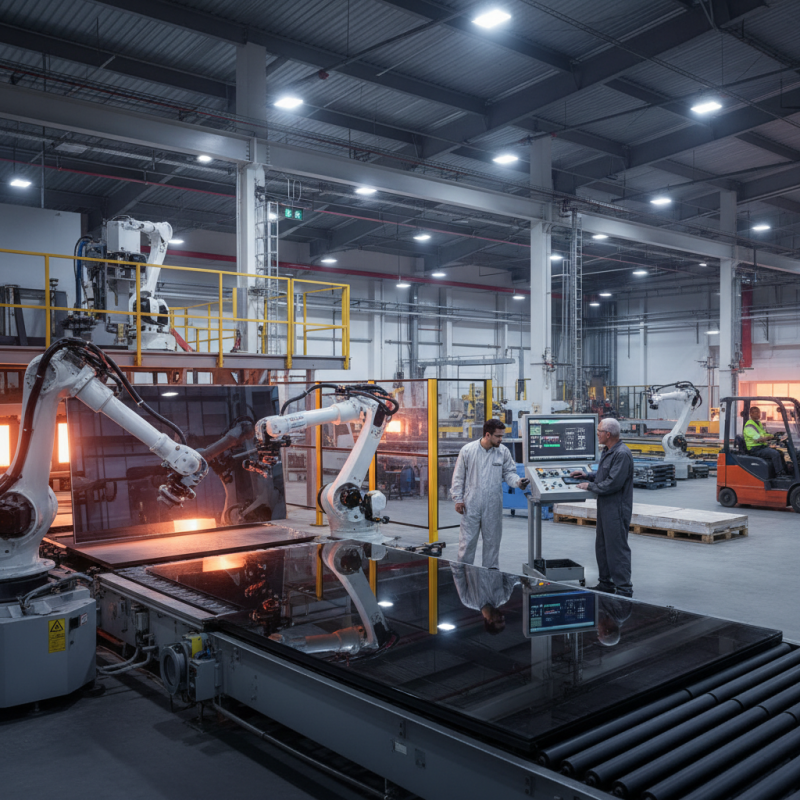
Automation technologies are revolutionizing glass production, offering significant solutions to reduce labor dependency. By integrating robotic systems into the manufacturing process, companies can achieve consistent quality and better efficiency. These robots can handle repetitive tasks like cutting and shaping glass with precision. They work tirelessly, minimizing human error and enhancing throughput.
While automation presents many advantages, it is not without challenges. The transition can be costly, requiring significant investment in advanced technologies and employee training. Additionally, over-reliance on machines raises concerns about job security. Workers may need to adapt, learning new skills to operate and maintain these sophisticated systems.
It's essential to strike a balance between automation and human input. Humans have unique problem-solving abilities that machines lack. Collaborating with automation can create a hybrid workforce, where technology supports human ingenuity. This mixed approach could lead to innovative breakthroughs in glass production, improving both efficiency and job satisfaction.
Top 10 Ways to Reduce Labor Dependency in Glass Production
Implementing Lean Manufacturing Principles to Minimize Labor Costs
Lean manufacturing principles are crucial for reducing labor dependency in glass production. By streamlining processes, companies can minimize labor costs and improve efficiency. According to a report by the Glass Association, manufacturers can achieve up to a 30% reduction in labor costs by adopting lean strategies. These strategies focus on eliminating waste in every area of production.
Implementing practices like value stream mapping helps identify non-value-added activities. It encourages teams to analyze their workflows critically. One tip is to regularly conduct team workshops to foster continuous improvement. Engaging workers in problem-solving offers insights while enhancing morale. Another important aspect is investing in automation where feasible. For example, automated molding and cutting can reduce the need for manual labor significantly.
Moreover, utilizing real-time data analytics promotes informed decision-making. A study from the International Journal of Glass Science indicates that companies employing data-driven techniques can improve production efficiency by 20%. While lean principles promise substantial benefits, challenges exist. Resistance to change and inadequate training can hinder implementation. It's essential to address these issues proactively for successful adoption.
Investing in Employee Training for Multiskilling in Glass Manufacturing
In glass manufacturing, investing in employee training is crucial. Multiskilling allows workers to perform various tasks. This flexibility reduces reliance on specific roles and enhances productivity. Workers can switch tasks as needed, ensuring smoother operations during peak times.
Training programs should focus on both hard and soft skills. Workers need to understand machinery while also improving teamwork. Workshops, simulations, and hands-on training can foster this environment. Yet, not all training yields immediate results. It’s vital to continuously assess the effectiveness of these programs. Feedback from employees can guide improvements.
Moreover, fostering a culture of learning is essential. Encourage employees to share knowledge and experiences. This collaboration builds a unified team capable of overcoming challenges. However, companies must also acknowledge the limits of this approach. Not every employee will thrive in a multiskilling environment. Identifying those strengths and weaknesses ensures better outcomes.
Adopting Smart Glass Production Techniques to Streamline Operations
In modern glass production, adopting smart techniques is crucial for reducing labor dependency. Automation and advanced technologies can significantly streamline operations. According to a recent industry report, factories leveraging smart manufacturing tools have seen a 30% reduction in labor costs. These advancements allow for enhanced efficiency, reducing the reliance on human labor while maintaining quality standards.
Implementing IoT devices can provide real-time monitoring of production lines. Sensors collect data on temperature, pressure, and material quality. This automation not only minimizes human error but also optimizes resource utilization. Many facilities have reported a 25% decrease in waste through these practices. However, a challenge remains in training the workforce to adapt to these new systems. The transition may be tough. Inadequate knowledge can lead to suboptimal use of technology, hindering potential benefits.
Artificial intelligence is another game-changer. AI algorithms analyze production patterns, predicting maintenance needs. This proactive approach can prevent costly downtimes. Firms utilizing AI saw a 20% increase in operational efficiency. Yet, reliance on such technology requires caution. Over-dependence might create gaps in skills among employees, ultimately affecting production quality. Balancing automation with workforce training is vital for sustained success.
FAQS
: Automation improves production efficiency and consistency. Robots can cut and shape glass precisely, reducing human error.
High costs and the need for employee training can be significant challenges. Job security concerns may arise as well.
A hybrid workforce encourages collaboration. Humans can solve complex problems, while machines handle repetitive tasks.
Lean manufacturing reduces labor costs by eliminating waste. It streamlines processes and improves overall efficiency in production.
Real-time data promotes informed decision-making. Companies using data-driven techniques can enhance efficiency by up to 20%.
Multiskilling employees allows flexibility and reduces reliance on specific roles, improving productivity during busy times.
Training should combine hard and soft skills. Workers need machine knowledge and teamwork abilities to function well.
Continuous evaluation is key. Employee feedback can guide improvements and ensure training meets its objectives.
A learning culture encourages knowledge sharing. Collaboration helps create a strong team capable of overcoming challenges.
Yes, not every employee excels in a multiskilling environment. Identifying individual strengths ensures better outcomes.
Conclusion
In the pursuit of optimizing operational efficiency, reducing labor dependency in glass production lines has become a critical focus for manufacturers. By assessing current labor dependency trends, companies can identify specific areas where automation technologies can be integrated to enhance production efficiency. Employing lean manufacturing principles further minimizes labor costs while promoting a more streamlined workflow.
Additionally, investing in employee training for multiskilling allows the workforce to adapt to various tasks, reducing the risk of labor shortages. Lastly, adopting smart glass production techniques can help to streamline operations significantly, ensuring that production processes are not only efficient but also technologically advanced. Overall, these strategies collectively contribute to a more autonomous production environment, ultimately leading to reduced labor dependency.
 Honghe Machinery
