Honghe Machinery
The glass manufacturing industry faces increasing pressure to enhance production efficiency and reduce costs. Automation plays a pivotal role in this transformation. According to a report by the International Glass Association, automating processes can increase productivity by up to 30%. Many glass factories are turning towards advanced automation technologies to meet these challenges.
To enhance automation level in modern glass factories, companies must invest in integrated systems. This includes robotics, machine learning, and smart sensors. A recent study highlighted that adopting these technologies results in lower error rates and improved product quality. However, the implementation process can be complex. Many factories struggle with integrating new systems into existing workflows.
Despite the benefits, some manufacturers remain cautious. The fear of high initial investment and the potential for job displacement often hinder progress. Striking a balance between human labor and automation is crucial. Continuous evaluation of these approaches is necessary. Embracing automation is not just about technology; it’s about rethinking operations to adapt to a fast-evolving industry landscape.
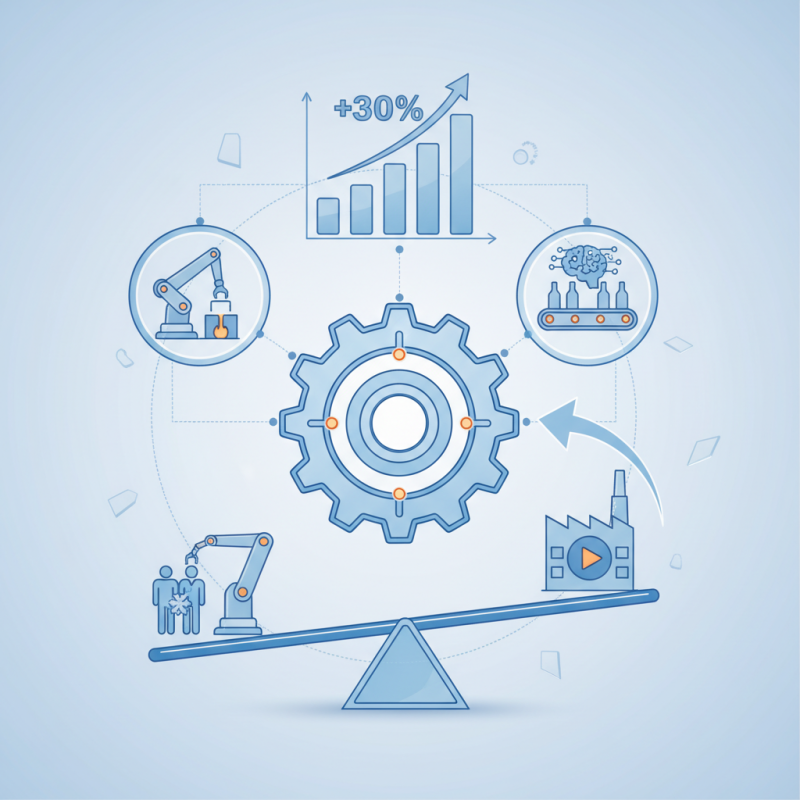
Automation is increasingly pivotal in glass manufacturing, transforming traditional processes into efficient, data-driven operations. According to industry reports, companies that adopt automation can achieve up to a 30% increase in productivity. This is primarily due to reduced human error and faster production times. Integration of sensors and AI can monitor production in real-time, ensuring consistency in quality and output.
However, the transition to automated systems is not without challenges. Many factories face initial high costs, along with the need for skilled personnel to manage these technologies. A survey indicated that 60% of glass manufacturers find workforce training to be a significant obstacle. Nonetheless, investing in training can yield long-term benefits, ultimately enhancing operational expertise and efficiency.
Moreover, the complexity of glass production requires careful consideration of automation levels. Some processes may benefit from human oversight, particularly in quality assurance. Balancing technology with human involvement remains crucial. A thoughtful approach to automation, supported by concrete data, can guide glass manufacturers toward sustainable growth and innovation.
In modern glass factories, identifying key areas for automation is crucial for enhancing productivity. Focus on tasks that are repetitive or require precise handling. These tasks often include bottle forming and quality inspection. Implementing automation in these areas can significantly reduce human error and improve efficiency.
Tips: Begin with a thorough analysis of your production line. Identify bottlenecks and tasks that hinder workflow. Engage employees in discussions about their daily challenges to find areas for improvement.
Also, consider automating packaging and logistics. These processes can consume valuable time and labor. Streamlining them leads to faster turnaround and better inventory management.
It is essential to keep in mind that automation should not completely replace human roles. Machines can assist but not entirely replicate human intuition and creativity. Create a balance where technology supports skilled workers, enhancing their effectiveness. Regularly assess the performance of automated systems to ensure they meet desired outcomes.
The glass manufacturing sector is undergoing a transformation driven by technological innovations. Automation technologies are improving operational efficiency and product quality. According to a recent report by the International Glass Association, companies integrating automation can see production efficiency rise up to 30%. This significant leap enhances competitiveness in a fast-evolving market.
Digital technologies like IoT and AI are at the forefront. They allow factories to monitor production in real time, predicting maintenance needs and reducing downtime. Interestingly, a survey revealed that 75% of industry leaders believe that AI-driven process optimization will be crucial for future growth. However, many factories are still stuck in traditional methods, which can hinder progress.
Tips: Start by evaluating your current processes. Identify areas that can benefit from automation. Investing in training is essential as well. Employees should be equipped to handle new technologies effectively. Regular audits can also highlight gaps in automation adoption. Ultimately, the journey to automation demands reflection and a willingness to adapt, ensuring that no opportunity is overlooked.
Integrating automation systems in glass factories can significantly boost efficiency. Industry reports suggest that automation upgrades can lead to a 20% increase in production speeds. Modern glass manufacturing relies on precision and speed. Implementing smart sensors and robotic systems can help monitor processes in real-time. This ensures less waste and higher quality output.
However, integration is not without challenges. Many factories struggle with the initial costs and training needs. A survey by the Glass Association indicated that 35% of companies faced hurdles in adapting their workforce to new systems. Effective training programs are crucial. Ensuring workers understand automation tools can mitigate resistance and enhance productivity.
Data transparency is another vital aspect. Many manufacturers overlook the need for robust data analytics. Systems must generate actionable insights from production processes. Reports show that companies using comprehensive data analysis observed a 15% reduction in downtime. Emphasizing the importance of data can lead factories toward a more automated future. Balancing technology with human skill sets remains essential. Recognizing these dynamics can help in crafting successful automation strategies.
This chart illustrates the distribution of automation levels in modern glass factories. As indicated, 30% of factories employ basic automation, while 50% are at partial automation, and 20% have fully integrated automation systems.
Automation in modern glass factories is transforming production efficiency. It allows for precise control over manufacturing processes, reducing human error. Yet, measuring its impact presents challenges. Factors such as equipment reliability and operator training must be considered. Production data must be collected consistently. This data provides insights into workflow bottlenecks and areas for improvement.
Analyzing automation's effect means looking beyond simple speed metrics. Production consistency is crucial. Automated systems can increase output but may also lead to increased machinery wear. Regular maintenance checks are essential. Maintenance downtime could offset gains in speed and reliability. An effective strategy involves balancing automation levels with human oversight.
Furthermore, the initial investment in advanced technologies can be daunting. Not every glass factory can afford state-of-the-art automation. Understanding the long-term benefits versus short-term costs is vital. Companies should evaluate their specific needs and production goals before implementing changes. Continuous reassessment ensures that automation aligns with evolving industry standards and customer demands.
: Automation is crucial, driving efficiency and increasing productivity by up to 30%.
Initial costs and the need for skilled personnel are significant challenges.
Focus on repetitive tasks and areas requiring precise handling, like bottle forming.
Engage employees in discussions about their daily challenges to find improvement areas.
Human oversight is essential, especially in quality assurance tasks.
IoT and AI are leading innovations that enhance monitoring and efficiency.
Evaluate current processes regularly and invest in training for employees.
No, a mix of technology and human creativity is vital for optimal results.
The need for regular audits to identify gaps in automation adoption.
Reflecting allows manufacturers to adapt and avoid missing valuable opportunities.
In today's competitive market, enhancing automation levels in modern glass factories is crucial for improving production efficiency and operational effectiveness. Understanding the role of automation in glass manufacturing begins with identifying key areas where automation can be implemented, such as material handling, quality control, and production monitoring. Technological innovations, including advanced robotics and AI-driven systems, are driving these changes and provide opportunities for significant advancements.
To successfully integrate automation systems, best practices such as careful planning, employee training, and continuous evaluation of automated processes should be adopted. Measuring the impact of automation on production efficiency is essential to justify investments and optimize operations. By following these guidelines, glass factories can not only enhance their automation level but also ensure sustainable growth and competitiveness in the industry.
