Honghe Machinery Honghe Machinery

What Is Custom Glass Processing for Better Flexibility?

Time:2026-11-21 Author:Ethan
0%

Custom glass processing adapts a standard sheet to a specific design, fit, or performance need. It may involve cutting, drilling, edging, tempering, laminating, or shaping. The right combination depends on the glass type, dimensions, intended use, and production limits. A small hole placed too close to an edge, for example, can affect strength and fabrication options. Details matter.

Improve Flexibility for Custom Glass Processing means planning around real project variables, not simply offering more shapes. Clear drawings, accurate measurements, and early discussion of tolerances help teams choose workable methods. A mock-up or sample can reveal issues that look harmless on screen. It takes time. That can feel inconvenient, but late changes may cost more. Flexibility has limits, too: heat treatment, thickness, and finishing requirements can restrict what is practical. Those trade-offs are sometimes overlooked.

A verified expert quotation was not included in the supplied material, so I cannot attribute a statement to a real specialist. For editorial use, a glass-processing expert could review this proposed line: “Flexible glass fabrication starts with understanding what the finished part must do, then matching the process to that job.” It is a draft, not a verified quotation. The discussion that follows can examine how design choices, production methods, and quality checks shape custom glass work—and where a more careful question may be needed.
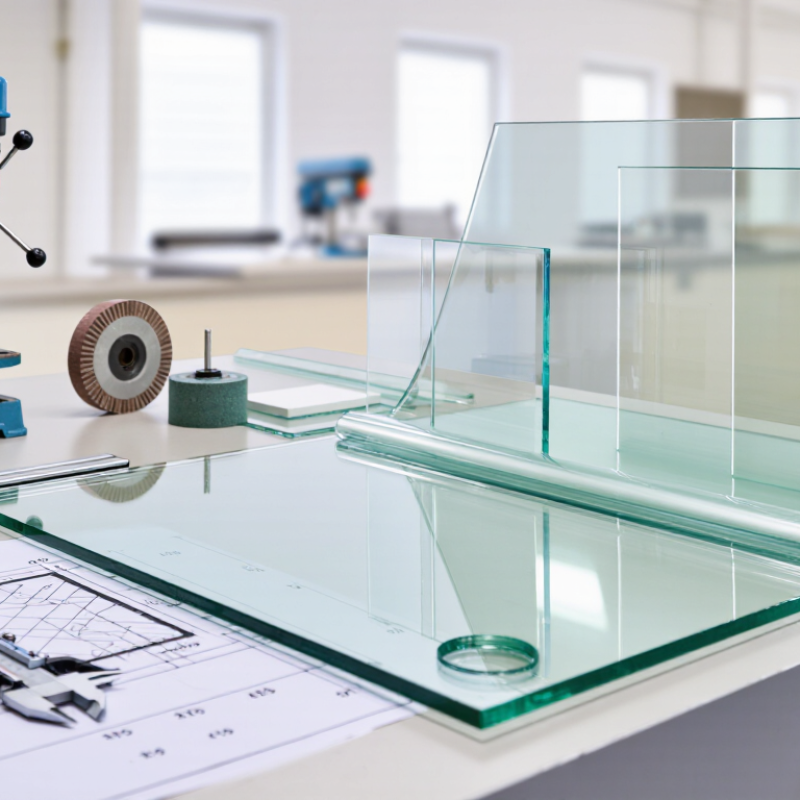
What Is Custom Glass Processing for Better Flexibility?

What Custom Glass Processing Means

Custom glass processing means adapting glass to a project’s dimensions, edges, openings, and performance needs. A fabricator may cut a sheet to size, grind or polish its edges, drill holes, then apply heat treatment, lamination, or a coating. Each step affects how the glass behaves. For example, holes and notches in a tempered shower panel must be made before heat treatment. After tempering, the panel cannot be safely trimmed. A few millimeters can affect hardware fit, clearances, and installation.

The process starts with practical details: intended use, support points, exposure to heat or moisture, and required thickness. Drawings should show finished dimensions, edge finish, hole locations, and tolerances. “Custom” does not mean every design is feasible. Large panes may need extra handling space, while cutouts near an edge can weaken the panel. A qualified processor can review these limits and suggest suitable glass. The installer should also confirm site measurements. One missed measurement can mean a remake. It happens.

Tips: Share hardware specifications and a dimensioned drawing before production. Confirm whether measurements describe the glass or the opening. Ask how edges will be finished, and verify that drilling happens before tempering. Allow installation clearance only when the design permits it.

How Glass Is Cut, Shaped, and Finished

What Is Custom Glass Processing for Better Flexibility?
How Glass Is Cut, Shaped, and Finished

Custom glass processing adapts a sheet to its intended use. The work begins with accurate measurements and a clear drawing. A glassworker scores and breaks straight edges, then uses grinding equipment or CNC tools for curves and cutouts. Small details matter. A misplaced hole can affect installation, so dimensions and clearances should be checked before production.

Tips: Measure twice, including openings and hardware positions. Specify exposed edges, such as polished or beveled finishes. Tell the fabricator where the glass will be installed; a shower panel and a cabinet door face different demands.

Finishing can include smoothing sharp edges, polishing, drilling, and applying surface treatments. Holes and notches usually need to be made before tempering, because tempered glass cannot be cut afterward. The right thickness and glass type also depend on the panel’s size, support, and use. A drawing may look complete and still miss a fitting detail. Reviewing a physical sample or installation plan can catch surprises before the glass is made.

Which Processing Options Increase Design Flexibility

Custom glass processing expands design choices by matching each panel to its shape, performance, and installation needs. CNC cutting can create precise outlines, notches, and holes for fittings. Edge polishing then gives exposed edges a clean, safer finish. These steps need careful coordination: tempered glass must be cut and drilled before heat treatment. Changes afterward usually mean making a new panel.

Heat treatment supports larger spans and demanding applications. The National Glass Association states that fully tempered glass is about four times stronger than annealed glass. Lamination offers another route, holding fragments together if the glass breaks.

For curved designs, bending can follow a measured radius, though samples and tolerances deserve close review. A curve that looks simple on a drawing may be harder to install.

Surface options add more visual control. Ceramic frit, digital printing, and patterned textures can create gradients, privacy zones, or repeated motifs. Insulating glass units can combine these choices with low-emissivity coatings.

The U.S. Department of Energy estimates that windows account for 25–30% of residential heating and cooling energy use. That figure makes performance worth considering alongside appearance.

Small details matter. In practice, the best specification is not always the most elaborate; a coating, edge, or hole placed slightly wrong can undermine the design.

How Customization Meets Different Performance Needs

Custom glass processing matches a pane to its actual job, rather than forcing one specification into every opening. A sun-facing façade may need solar-control coating, while a shower screen needs easy-clean surfaces and safe edge finishing. Thickness, tint, lamination, tempering, and shape can be adjusted to address different demands. Small choices matter: a darker tint can reduce glare, but may also dim an interior room.

The energy stakes are significant. The International Energy Agency’s 2023 buildings analysis reports that building operations account for about 30% of global final energy use and 26% of energy-related emissions. The U.S. Department of Energy says low-emissivity storm windows can reduce heating and cooling costs by 10–30%, depending on existing windows and conditions. These figures describe broader building performance, not a guaranteed result for every custom pane. Site orientation, frame quality, installation, and local climate all affect outcomes.

A useful specification starts with measurable needs: sunlight exposure, privacy, noise, impact risk, and cleaning frequency. For example, a laminated pane can hold together after breakage, while a solar-control coating can limit heat gain without relying only on heavy tint. More layers are not automatically better. They can add cost, weight, or visual distortion, and those trade-offs deserve review before fabrication. Exact samples help; small differences in color can look larger across a full wall.

What Is Custom Glass Processing for Better Flexibility?

How customization meets different performance needs: compare representative visible light transmission (VLT) for common glass options.

Values are approximate representative examples, not specifications for a particular product. Actual VLT varies with glass thickness, interlayers, coatings, and product design.

Where Custom-Processed Glass Is Commonly Used

Custom-processed glass is common in homes, offices, shops, and public buildings. In kitchens, cut-to-size panels can protect a wall behind a sink or hob, while polished edges make exposed corners easier to clean. Shower enclosures often need precise dimensions, drilled holes, and suitable safety glass to fit around tiles and fixtures. A few millimeters can matter.

Offices use glass partitions to divide rooms while preserving daylight. Door cutouts, handle holes, and carefully finished edges help panels fit their hardware. Retail spaces may use glass shelves, display cases, and storefront panels, where clarity and accurate sizing affect both presentation and installation. These parts need practical planning, not just attractive drawings.

Custom work also appears in tabletops, cabinet doors, and stair or balcony panels. Glass thickness, support points, and edge treatment should match the intended use; a fabricator can help check those details. Tempered and laminated glass serve different purposes, so they should not be treated as interchangeable. Specs can get overthought. Still, changing a hole location after production is costly, and I have seen small measurement assumptions cause avoidable delays. When ordering, share final site measurements and the hardware details, then confirm tolerances with the supplier.

FAQS

What does custom glass processing involve?

It adapts glass to a project’s dimensions, edges, openings, and performance needs. Work may include cutting, polishing, drilling, heat treatment, lamination, or coatings.

When should holes and cutouts be made?

They should be completed before tempering. Tempered panels generally cannot be safely trimmed or drilled afterward. A misplaced hole may mean a replacement.

What details should I provide before production?

Share a dimensioned drawing, finished sizes, edge finish, hole locations, tolerances, hardware details, and intended use. Confirm whether measurements describe the glass or the opening. Easy to miss.

How can processing expand design options?

CNC cutting can create outlines, notches, and fitting holes. Polished edges suit exposed sides. Printed designs and textures can add privacy or patterns.

Are tempered and laminated glass interchangeable?

No. Tempered glass is heat-treated for strength, while laminated glass holds fragments together if it breaks. Choose based on the application and support points.

Where is custom-processed glass commonly used?

Common uses include shower enclosures, kitchen backsplashes, office partitions, retail displays, tabletops, cabinet doors, and balcony panels. A shower panel may need holes aligned with fixtures.

Why do site measurements matter?

Tiles, hardware, and clearances affect fit. A few millimeters can cause installation trouble or a remake. Have the installer confirm final measurements. It happens.

Can every glass design be made exactly as drawn?

Not always. Large panes need handling space, and cutouts near edges can weaken a panel. Ask a qualified processor to review dimensions and tolerances. A drawing may need changes.

Conclusion

Custom glass processing transforms standard glass into components shaped for specific design and performance needs. The process can include precise cutting, edge polishing, drilling, bending, laminating, and other finishing steps that help glass fit a chosen size, form, and application. By selecting suitable processing options, designers can balance appearance, strength, light transmission, privacy, and ease of installation. These choices help Improve Flexibility for Custom Glass Processing, allowing a project to respond to different spatial and functional requirements rather than relying on one standard solution.

Custom-processed glass is used in settings such as homes, offices, retail interiors, and public buildings, including windows, doors, partitions, furniture, and decorative features. Matching the fabrication method to the intended use helps create glass elements that are both practical and visually consistent with the surrounding design.

Ethan

Ethan

Ethan is a seasoned marketing professional with a deep expertise in our company's innovative product line. With a passion for sharing knowledge and insights, he takes the lead in regularly updating our corporate blog, where he explores industry trends, product features, and effective marketing......