Honghe Machinery Honghe Machinery

China Top 10 Glass Cutting Machines to Reduce Waste?

Time:2026-11-14 Author:Oliver
0%

Every glass sheet has a cost, and every offcut tells part of the story. In busy workshops, a poorly placed cut can leave a narrow strip that fits no order. Repeated across a shift, those strips become real losses. Reducing them takes more than a faster blade. It depends on accurate measurement, sound cutting plans, reliable handling, and operators who can spot a problem before it spreads.

Lean manufacturing pioneer Taiichi Ohno offered a useful principle: “Costs do not exist to be calculated. Costs exist to be reduced.” Applied to glass, that idea points toward better use of each sheet, not simply higher machine speed. This guide to China’s top 10 glass cutting machines examines features that can support Reduce Material Waste in Glass Cutting and Processing, including optimization software, precision scoring, automatic loading, and process monitoring. These tools may help shops improve yield and limit breakage, though results depend on glass type, order mix, maintenance, and operator skill.

A specification sheet cannot tell the whole story. A machine may nest shapes efficiently yet struggle with a shop’s actual thickness range or production flow. Small details matter: a chipped edge, a misread dimension, or a suction cup placed poorly. Waste can still happen. The comparison ahead offers practical points to check, while recognizing that no single machine fits every workshop.
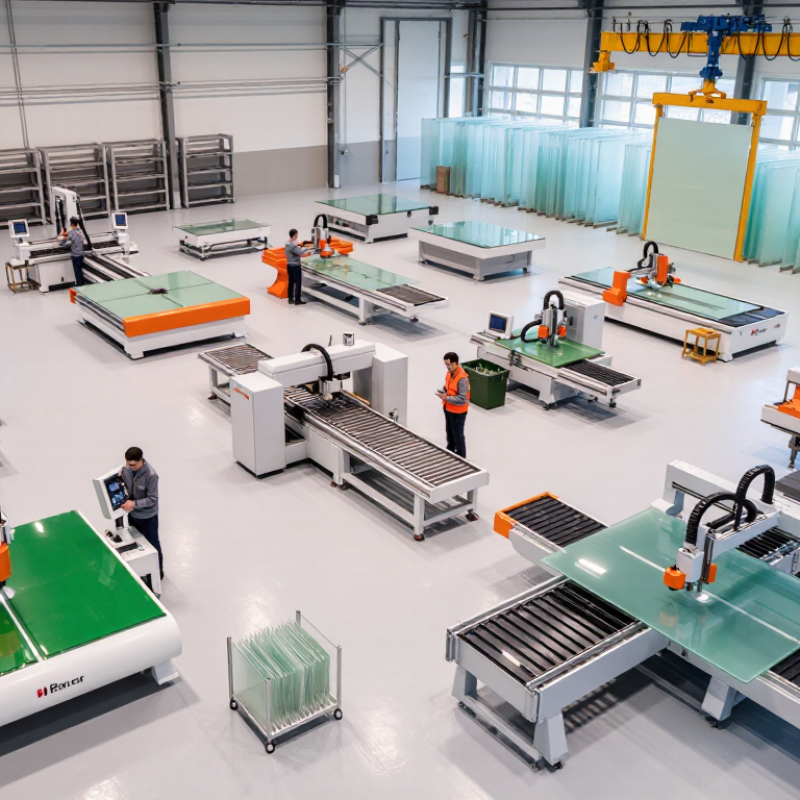
China Top 10 Glass Cutting Machines to Reduce Waste?

How Glass Cutting Machines Improve Accuracy and Reduce Waste

On a glass line, accuracy starts before the blade touches the sheet. Cutting software maps pane dimensions, edge clearances, and visible defects into a nesting plan. A servo-controlled bridge follows the score line, while pressure controls help limit branching cracks. Better nesting can fit smaller panes into usable gaps, leaving fewer narrow strips behind. Small gains matter. Operators should still inspect the first sheet: bubbles, bow, or coating marks may not appear in the digital plan. A precise machine cannot correct poor measurements or careless loading.

The U.S. EPA’s 2018 Advancing Sustainable Materials Management report estimated 600 million tons of construction and demolition debris in the United States. That figure covers all C&D materials, not glass alone. For resource context, the Glass Packaging Institute reports that recycling one ton of container glass conserves about 1,300 pounds of sand and 410 pounds of soda ash; those figures are not flat-glass yield data. Accurate cuts keep more usable glass in each sheet, and cleanly separated offcuts may re-enter recycling streams. Not every remnant qualifies. Laminated layers, coatings, and mixed fragments complicate sorting, so recovery depends on local processing. Measurement helps, but careful handling still matters.

How Glass Cutting Machines Improve Accuracy and Reduce Waste

Illustrative sheet-area calculation for a 2,440 × 1,830 mm glass sheet. Each plan cuts 600 × 400 mm panes; values are calculated from the dimensions shown, not industry-wide performance data.

A well-nested cutting plan can fit more panes on the same sheet and leave less unused area. Automated measurement and positioning help execute the planned layout consistently; actual results depend on pane sizes, sheet dimensions, edge margins, and cutting setup.

Types of Glass Cutting Machines Used in China

China’s glass workshops use several machine types, each suited to different panel sizes and production volumes.

Straight-line cutters score rectangular sheets along measured guides. They suit repeat orders and simpler layouts.

CNC cutting tables use programmed paths, vacuum support, and controlled scoring for complex shapes. Some systems add automatic loading or glass-edge detection, reducing manual handling but requiring accurate setup.

For curved or irregular parts, CNC shape-cutting machines follow digital templates. Laminated-glass lines need additional steps: operators score each glass ply, separate it, then process the interlayer.

China’s National Bureau of Statistics reported 969.01 million weight boxes of flat glass produced in 2023. That figure shows the sector’s scale, but it does not measure cutting waste. Automation helps, but it cannot rescue a poor nesting plan. Small offcuts still add up.

Tips:

Match the table size and cutting speed to your common sheet dimensions, not just peak capacity. Check scoring-wheel condition and confirm software layouts against actual sheet measurements.

Keep a record of remnant sizes; reusable pieces can otherwise be missed.

Machine settings need review, too. Even a precise cutter can chip edges when pressure or alignment is off.

Key Features That Make Cutting More Material-Efficient

Material efficiency starts with accurate measurement and a cutting plan that fits each sheet. Nesting software can arrange different glass sizes together, reducing unused strips and awkward offcuts. Remnant tracking helps operators reuse suitable leftover pieces instead of sending them straight to waste. Still, software suggestions need checking; a poorly entered measurement can waste a whole sheet.

On the cutting line, stable sheet support matters. Air-float tables help move large panes without dragging them across the surface, while calibrated scoring pressure creates a consistent score line. Too much pressure may cause rough breaks; too little can lead to incomplete separation. Automatic thickness detection and regular scoring-wheel checks help keep settings consistent. They are not magic fixes. Glass quality, handling, and operator judgment still affect yield.

Tips: Measure twice and confirm the glass thickness before loading. Keep reusable offcuts labeled with their dimensions. Review breakage and leftover records weekly; patterns can reveal where settings or layouts need adjustment. Some waste is unavoidable, but unexplained waste deserves a closer look.

China Top 10 Glass Cutting Machines to Reduce Waste? — Key Features That Make Cutting More Material-Efficient

No. Machine Type Typical Cutting Work Material-Efficiency Features Best-Fit Applications and Considerations
1 CNC Straight-Line Glass Cutting Table Automated scoring and breaking of flat glass into rectangular or straight-edged parts. Cutting plans can combine different part sizes on one sheet; controlled scoring and repeatable positioning help limit miscuts. Suitable for architectural, furniture, and appliance glass. Results depend on accurate sheet measurements and correct scoring parameters.
2 Automatic Glass Cutting Line with Loading Automated sheet loading, positioning, scoring, and transfer for production batches. Automated alignment and repeatable handling can reduce positioning errors and glass breakage during manual transfer. Useful for regular, high-volume production. Requires suitable sheet handling equipment and a layout matched to the factory workflow.
3 CNC Shape-Cutting Table Scored cutting of programmed curves, circles, and other shaped flat-glass parts. Nesting software can arrange multiple shapes on a sheet and account for cutting clearances and edge margins. A fit for custom furniture, interior, and specialty parts. Tight curves and narrow features must remain within process limits.
4 Glass Cutting Table with Automatic Optimization Software Generation of cutting patterns for mixed-size orders on available stock sheets. Nesting algorithms can improve sheet utilization by arranging parts around usable areas and reducing avoidable offcuts. Most valuable when order sizes and dimensions vary. Optimization depends on accurate inventory, part data, and kerf or score allowances.
5 Remnant-Management Glass Cutting System Cutting new orders from full sheets and usable leftover pieces. Remnant records can track dimensions and material type, allowing suitable offcuts to be selected before opening a new sheet. Helpful for job shops and mixed-order production. Remnants need clear identification and must be free from defects that affect the next cut.
6 Low-E Glass Cutting and Edge-Deletion Line Cutting coated glass, with a process stage to remove coating from specified edge areas when required. Accurate dimensions and controlled coating removal help prevent rejected parts caused by incorrect edge preparation. Used in insulating-glass production. Coating type, edge-deletion width, and downstream specifications must be confirmed.
7 Laminated Glass Cutting System Scoring glass plies and separating laminated material using a compatible interlayer-separation process. Controlled scoring and separation can reduce edge damage and part rejection compared with unsuitable cutting methods. For laminated products such as safety glazing. The process must suit glass thickness, interlayer material, and product construction.
8 Glass Cutting Table with Air-Float Surface Manual or automated positioning and cutting of flat glass on an air-cushion work surface. Air flotation makes sheets easier to move across the table, helping reduce handling strain, scratches, and accidental damage. Suitable for sheet handling and cutting work where surface protection matters. Air flotation supports handling but does not itself optimize the cutting layout.
9 Waterjet Glass Cutting Machine Abrasive waterjet cutting of glass shapes and openings that are difficult to produce by conventional score-and-break methods. Programmable tool paths enable complex contours and internal cutouts; part nesting can help use sheet area efficiently. Useful for specialty shapes and fabrication. The cut path, abrasive use, edge quality, and material-specific settings should be evaluated for each job.
10 Laser Glass Cutting System Specialized thermal or laser-assisted processing for compatible glass types and precision applications. A narrow programmed processing path and precise digital positioning can support accurate small or intricate parts with suitable materials. Best assessed for specific glass compositions and product requirements. Material compatibility, edge quality, throughput, and total process cost require validation.

Note: These are equipment categories and configurations, not a verified brand ranking. Actual material yield depends on sheet size, part mix, layout rules, edge quality requirements, operator setup, and the condition of reusable remnants.

Ten Chinese Glass Cutting Machines to Consider

Ten Chinese glass cutting machines to consider is best read as ten machine configurations, not a fixed ranking. Options include:

  1. a manual straight-line table for small workshops;
  2. an automatic straight-line system for repeat orders;
  3. a CNC bridge cutter for varied shapes;
  4. a large-format table for oversized sheets;
  5. a compact cutting table where floor space is tight;
  6. a laminated-glass cutting system;
  7. a Low-E glass cutting table designed for coated sheets;
  8. a machine with automatic loading;
  9. a setup with integrated breakout; and
  10. a cutting line with nesting software to improve sheet yield.

Each suits a different workload. More automation is not always better.

Before choosing, check the usable cutting area, glass thickness range, positioning accuracy, and expected output per shift. Ask for a live cutting demonstration using material close to your own. Watch the operator load a sheet, align it, and remove the cut pieces. Small delays become costly over a full day.

A neat specification sheet can still mislead. Request references from comparable workshops, and confirm spare-part availability and technician response times.

Software deserves attention, too: poor nesting can leave awkward offcuts, even on a precise machine. Review sample layouts and measure actual waste. Budget for installation, training, and routine maintenance—not only the purchase price.

How to Compare Machines for Different Production Needs

Choosing a glass cutting machine starts with the work, not the headline cutting speed. A shop producing varied, small batches may benefit more from quick setup and flexible nesting than from a high-speed line built for repeat orders. For large sheets and steady runs, check loading capacity, cutting-head speed, and whether the line can keep pace with downstream edging. Ask suppliers to run your actual glass sizes and order mix; showroom samples rarely show the awkward offcuts that hurt yield.

Compare usable output, not just the machine’s quoted accuracy. Track sheet utilization, remnant size, changeover time, and breakage across several shifts. The U.S. Environmental Protection Agency estimated that 3.1 million tons of glass were recycled in 2018, a 31.3% recycling rate. That figure covers all glass, not cutting-floor scrap, so it cannot predict a factory’s savings. Still, it underlines why better material use matters. The European Commission’s Glass Manufacturing BREF reports that adding 10% cullet can reduce melting energy by roughly 2.5–3%; cutting efficiency and furnace energy are separate measures.

Request a documented trial with your own operators, glass thicknesses, and defect rules. Record the starting sheet area and the saleable pieces produced. A spreadsheet helps, but it can miss real handling delays. We have seen tidy layouts stumble when labels, suction cups, or remnant storage slow the shift. Include service response, software support, and operator training in the comparison; the fastest machine may not be the best fit.

FAQS

How can a glass shop reduce cutting waste?

Use nesting software to place different glass sizes on each sheet. Track reusable offcuts by size. Check every measurement before cutting.

Why should operators label leftover glass?

Labels show each remnant’s dimensions, making useful pieces easier to find. An unlabeled strip may be forgotten. Small details matter.

How do air-float tables help during cutting?

They let operators move large panes without dragging them across the table surface. This can reduce handling damage, but careful handling still matters.

What affects the quality of a score line?

Calibrated scoring pressure creates a consistent line. Excess pressure can cause rough breaks, while insufficient pressure may prevent clean separation. Check the scoring wheel regularly.

Which machine features matter for small, varied orders?

Flexible nesting and quick setup may matter more than headline speed. Test the machine with your actual order mix and glass sizes.

What should a production trial measure?

Record starting sheet area, saleable pieces, leftover sizes, breakage, and changeover time. Include your own operators and defect rules. A spreadsheet helps, imperfectly.

How can a shop spot recurring waste?

Review breakage and leftover records weekly. Repeated patterns may point to layout problems, incorrect settings, or handling delays. Some waste is unavoidable.

What else should buyers compare besides cutting speed?

Check loading capacity, downstream production pace, service response, software support, and operator training. A fast machine can still struggle with labels or remnant storage.

Conclusion

This article explores how modern glass cutting machines can improve precision while helping manufacturers Reduce Material Waste in Glass Cutting and Processing. It explains how accurate measurement, optimized cutting paths, automated positioning, and consistent edge control can reduce errors, broken sheets, and unusable offcuts. It also introduces common machine types used in China, from manual and semi-automatic systems to fully automated cutting lines, and outlines the features that support more efficient material use.

The article presents ten Chinese glass cutting machines to consider as examples of options for different workshop sizes and production goals, without treating one solution as suitable for every operation. It also offers practical ways to compare machines, including cutting accuracy, sheet size, processing speed, automation level, software capabilities, ease of operation, and maintenance needs. By matching these factors to the type and volume of work, buyers can make a more informed choice and improve production efficiency while managing material loss.

Oliver

Oliver

Oliver is a seasoned marketing professional with a wealth of expertise in driving brand awareness and engagement. With a deep understanding of our company's product offerings, he consistently delivers high-quality content that enriches our professional blog. His insights not only shed light on......