Honghe Machinery Honghe Machinery

What Is the Best Way to Reduce Labor in Glass Production?

Time:2026-09-19 Author:Ethan
0%

Reducing labor in glass production is not simply a matter of adding robots. The stronger approach is to remove repetitive, risky, and physically demanding tasks while protecting process knowledge. Glass lines often depend on workers for loading, inspection, stacking, changeovers, and emergency adjustments. These activities can create bottlenecks when demand rises or skilled operators become unavailable.

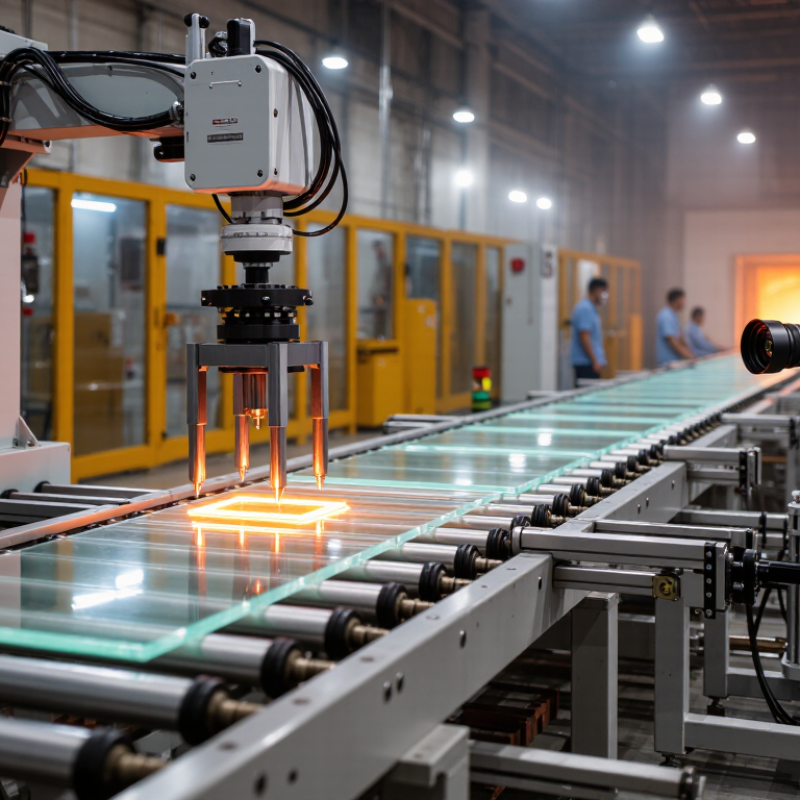
W. Edwards Deming, a respected manufacturing quality expert, warned, “A bad system will beat a good person every time.” His principle remains valuable for companies seeking to Reduce Labor Dependency in Glass Production Lines. A stable system begins with measurable process data. Sensors can monitor temperature, pressure, conveyor speed, and furnace conditions. Vision systems can detect chips, cracks, bubbles, and surface defects before products reach packaging. Robotic palletizing can then handle hot, heavy, or repetitive movements with greater consistency.

The best results usually come from gradual automation. Start with the task that causes the most fatigue or delay. Connect equipment through a manufacturing execution system. Train operators to supervise performance, interpret alarms, and maintain critical machines. Small details matter, such as clear access around a robot cell, clean camera lenses, and spare parts stored near the line.

Automation is not a magic switch.

Some projects fail because managers underestimate maintenance, training, or product changeovers. That weakness deserves honest review. A line may use fewer workers but still lose efficiency through poor scheduling or unreliable sensors. The most dependable strategy combines practical automation, skilled supervision, preventive maintenance, and continuous improvement. That balance can reduce labor pressure without sacrificing safety, quality, or operational resilience.
What Is the Best Way to Reduce Labor in Glass Production?

Map Labor-Intensive Glass Processes Using OEE, Cost-per-Ton, and BLS Data

What Is the Best Way to Reduce Labor in Glass Production?

Labor reduction starts with a process map, not a headcount target. Track batch charging, forming, annealing, inspection, and packaging separately. Record operators, labor minutes, downtime reasons, and good tons produced. OEE combines availability, performance, and quality. A low availability score may reveal frequent mold changes or furnace interruptions. A low performance score may expose slow manual handling. Quality losses also consume labor twice.

Calculate direct labor cost per ton for each process: total labor dollars divided by good tons. Include overtime, relief coverage, training, and rework. The U.S. Bureau of Labor Statistics reported median annual pay of $116,970 for industrial production managers in May 2023. That figure is not an operator wage, but it helps estimate supervisory overhead. BLS Quarterly Census of Employment and Wages data can also benchmark payroll and employment for glass and glass product manufacturing under NAICS 32721.

Use the numbers together. A packaging cell may show acceptable OEE, yet still require three people per shift. Automation may improve performance but increase maintenance labor. That trade-off is easy to miss. The U.S. Department of Energy’s industrial efficiency assessments repeatedly emphasize measuring energy and production losses at process level. Labor losses deserve the same discipline. Start with one production line, verify data manually, and challenge inaccurate downtime codes. The first map will probably be incomplete. That is useful.

Prioritize Robots for Hot-End Handling Above 1,000°C to Reduce Manual Work

What Is the Best Way to Reduce Labor in Glass Production?

Reducing labor in glass production starts with the hottest and most repetitive tasks. In hot-end areas above 1,000°C, robots can handle glowing glass containers, molds, and transfer operations with consistent timing. Workers no longer need to stand close to radiant heat for every cycle. One trained operator can monitor motion, temperature readings, and safety signals from a protected station. This also reduces repetitive lifting and helps stabilize production speed. However, automation is not magic. Poor gripper alignment can damage fresh glass or create costly stoppages.

Tips: Start with one high-frequency transfer task. Measure cycle time, rejected pieces, and unplanned downtime before installation. Use heat shielding and temperature-rated tooling. Test the robot at different glass temperatures, not only during ideal runs. Keep manual access available for controlled maintenance. Train operators to adjust programs safely and recognize early faults.

Reliable results require careful integration with conveyors, sensors, and forming equipment. A robot should react to real production variation, including uneven cooling or small position changes. Engineers should review emergency stops, guarding, and maintenance intervals with the operating team. Daily inspection of grippers and cables is essential near intense heat. Some manual checks may remain necessary. That is not failure; it may be the safer design. Production data should guide each next improvement, rather than assumptions made before the robot is installed.

What Is the Best Way to Reduce Labor in Glass Production? Prioritize Robots for Hot-End Handling Above 1,000°C to Reduce Manual Work
Evaluation Dimension Manual Hot-End Handling Robotic Hot-End Handling Typical Labor or Operational Effect
Glass temperature at the handling point Approximately 1,000–1,200°C for many hot-end forming and transfer operations Robot, tooling, and heat shielding are selected for the specified thermal exposure Moves personnel away from the highest-temperature work zone
Typical handling activities Removing hot articles, transferring products, clearing stoppages, adjusting tooling, and visual checks Pick-and-place, transfer, stacking, loading, unloading, and repeatable reject removal Routine and repetitive manual movements can be automated first
Operators directly assigned to one handling cell Common planning assumption: 2 operators per cell during continuous production Common planning assumption: 0.5–1 operator equivalent for supervision, replenishment, and exceptions Potential direct labor reduction: approximately 50–75%
Illustrative annual direct labor hours 2 operators × 3 shifts × 8 hours × 300 operating days = 14,400 labor hours 0.5–1 operator equivalent × 3 shifts × 8 hours × 300 operating days = 3,600–7,200 labor hours Illustrative saving: approximately 7,200–10,800 labor hours per cell per year
Handling-cycle consistency Cycle time may vary with fatigue, heat exposure, product changes, and manual positioning Programmed motion, controlled acceleration, and repeatable positioning More stable cycle timing and fewer labor-related fluctuations
Operator exposure to heat Frequent entry into the hot-end area may be required for handling or intervention Operators generally remain outside the primary heat zone except during controlled maintenance Reduced heat stress and lower frequency of direct hot-zone intervention
Payload and tooling considerations Dependent on human lifting capacity, protective equipment, and handling speed Robot payload is selected according to the article, gripper, thermal shield, and acceleration requirements Supports heavier or more repetitive handling without increasing manual strain
Workforce allocation Personnel remain tied to the cell for most of the production cycle One trained operator may supervise multiple automated cells, subject to line layout and safety requirements Labor can be reassigned to quality checks, maintenance, setup, and process improvement
Changeover and product variation Often requires manual adjustment and repeated operator intervention Recipe-based motion and tool-change procedures can standardize repeatable adjustments Lower dependence on individual operator technique when recipes are properly validated
Safety requirements Requires heat-resistant PPE, guarded access, training, and procedures for hot material Requires interlocked guarding, emergency stops, thermal protection, safe robot access, and lockout procedures Automation reduces routine exposure but does not remove the need for safety controls
Best automation priority Manual tasks that are repetitive, hot, frequent, and physically demanding Robotized transfer, hot article removal, stacking, and reject handling above 1,000°C Prioritize the hottest and most repetitive handling step for the fastest labor impact
Planning note: The labor figures are an illustrative three-shift model based on 300 operating days per year. Actual results depend on line speed, product weight, layout, changeover frequency, safety requirements, robot availability, and the number of cells supervised by each operator.

Deploy Vision Inspection to Replace Repetitive Checks at High-Speed Lines

High-speed glass production makes repetitive inspection difficult to sustain. Workers may check bottles, panels, or containers under bright lights for hours. Fatigue can weaken attention, especially when defects appear only once every few minutes. Vision inspection places cameras, lighting, and software beside the conveyor to perform the same check continuously.

The International Federation of Robotics reported 541,302 industrial robots were installed worldwide in 2023. This figure shows how quickly manufacturers are adopting automated production tools. In glass plants, vision systems can detect cracks, chips, bubbles, scratches, and shape deviations without stopping the line. A well-designed system records images, rejects defective pieces, and sends trend data to quality teams. Operators then spend less time watching every item and more time correcting process conditions.

The details matter. Lighting must reveal transparent defects without creating glare. Cameras need stable positioning, fast exposure, and carefully tested inspection zones. A weak defect library creates false alarms. That can force workers back into manual checking. Vision is not magic. Poor calibration may hide small edge cracks or reject acceptable products. Practical trials should measure detection accuracy, false-rejection rates, maintenance time, and operator workload before full deployment. The British Standards Institution’s quality guidance also emphasizes controlled processes, documented checks, and continual improvement. Those principles keep automation reliable, rather than merely impressive.

Reducing Labor in Glass Production with Vision Inspection

Modeled labor requirements for inspecting 10,000 glass containers on a high-speed production line. Automated vision inspection reduces repetitive manual checks while operators focus on exceptions and process control.

Operating model: manual inspection requires two inspectors for an eight-hour shift; vision inspection requires one operator for exception handling and verification.

Integrate MES and Predictive Maintenance to Improve OEE by 5–10%

What Is the Best Way to Reduce Labor in Glass Production?

Integrate MES and predictive maintenance to improve OEE by 5–10%.

In a glass plant, labor often disappears into searching for causes. An MES connects batch records, furnace temperatures, forming speeds, inspection results, and downtime codes. Operators see the same production picture. Maintenance teams receive evidence, not hallway guesses.

Predictive maintenance adds a practical layer. Vibration sensors can identify bearing wear before a conveyor stops. Motor-current trends may reveal abnormal loading. Temperature changes can expose problems around pumps, fans, and forming equipment. McKinsey’s “Predictive Maintenance 4.0” reports that predictive maintenance can reduce machine downtime by 30–50% and maintenance costs by 10–40%. The figures are not automatic. Poor sensor placement creates expensive noise.

A controlled pilot should track availability, performance, and quality by line. Compare four weeks of baseline data with four weeks after deployment. A 5–10% OEE improvement is a reasonable operating target, not a guaranteed result. One missed downtime code can distort the calculation. One false alarm can also train operators to ignore warnings. Clear escalation rules matter: the system flags risk, while experienced technicians confirm the repair. Data should remain traceable from the furnace floor to the production report. This supports reliable decisions and exposes an uncomfortable truth: some “labor savings” are only hidden work transferred to maintenance.

Reskill Operators and Validate Automation Payback Within 24 Months

What Is the Best Way to Reduce Labor in Glass Production?

Reskill Operators and Validate Automation Payback Within 24 Months

Reducing labor in glass production rarely means removing people immediately. It means moving operators from repetitive handling toward setup, inspection, maintenance, and process control. Automated loading, palletizing, and quality checks can reduce physical workload. However, each system needs trained people who understand glass defects, sensor limits, and safe changeovers.

A practical payback review should measure labor hours, scrap, downtime, energy use, and output before installation. Compare these figures with equipment costs, training, maintenance, and integration expenses. Use real production data, not optimistic assumptions. Our first estimate may look attractive, but a slower changeover can weaken the result. A 24-month payback target should include conservative production volumes and unexpected repairs. Review the numbers monthly during the first six months.

Tips: Start with one bottleneck. Train operators before commissioning. Let them test the new workflow. Record stoppages by cause, not guesswork. Keep a manual backup plan.

Reskilling should be practical and visible. An operator might learn recipe management, robotic recovery, camera verification, or basic fault diagnosis. Short lessons beside the production line often work better than classroom theory alone. Supervisors should confirm competence through observed tasks. Not every automation project will meet its target, and that is worth admitting early. If results remain weak, adjust the process before adding more equipment.

FAQS

How should a glass plant begin reducing labor?

Build a process map before setting headcount targets. Separate batch charging, forming, annealing, inspection, and packaging. Record operators, labor minutes, downtime reasons, and good tons. Start with one line. The first map may be incomplete.

How can OEE reveal hidden labor losses?

OEE combines availability, performance, and quality. Low availability may indicate mold changes or furnace interruptions. Low performance can expose slow manual handling. Quality losses consume labor twice. They require production and rework.

How is direct labor cost per ton calculated?

Divide total labor dollars by good tons produced. Include overtime, relief coverage, training, and rework. Compare each process separately. A cheap-looking area may hide heavy support labor.

Which glass production tasks are suitable for robots?

Start with repetitive hot-end handling above 1,000°C. Robots can move fresh containers, molds, or transfers consistently. Workers can monitor from a protected station. Begin with one frequent transfer task. Do not automate everything.

What should be measured before installing a hot-end robot?

Record cycle time, rejected pieces, stoppages, and manual lifting frequency. Test several glass temperatures, not only ideal conditions. Check grippers, cables, guarding, and emergency stops. Poor alignment can damage fresh glass.

Can automation reduce labor while increasing costs?

Yes. A robot may improve speed but increase maintenance work. A packaging cell may retain three people per shift despite acceptable OEE. Include maintenance, training, and programming time. The trade-off is easy to miss.

How can vision inspection reduce repetitive manual checks?

Cameras and controlled lighting can inspect cracks, chips, bubbles, scratches, and shape changes. The system can reject defects and record images. Operators then focus on process corrections. Fatigue still matters.

What problems can weaken an automated vision system?

Glare may hide defects in transparent glass. Poor calibration can miss edge cracks or reject good pieces. A weak defect library creates false alarms. Measure detection accuracy, false rejections, maintenance time, and workload. Vision is not magic.

How should a plant verify labor and production data?

Compare system records with manual observations during real shifts. Challenge inaccurate downtime codes. Check whether good tons exclude rejected products. Review public employment data for general labor benchmarks. Benchmarks are clues, not exact answers.

What human work should remain after automation?

Keep controlled manual access for maintenance and unusual faults. Workers may still verify samples or adjust changing conditions. Train them to recognize early failures. Some manual checks are safer. That is not failure.

Conclusion

Reducing labor in glass production starts with identifying where human effort, time, and cost are concentrated. Manufacturers can map labor-intensive activities by combining Overall Equipment Effectiveness (OEE), cost-per-ton analysis, and relevant workforce data. This assessment helps prioritize automation investments, especially in hot-end handling tasks exposed to temperatures above 1,000°C, where robots can improve safety, consistency, and productivity. Vision inspection systems can also replace repetitive manual checks on high-speed lines while maintaining reliable quality control.

To Reduce Labor Dependency in Glass Production Lines, companies should connect production equipment with Manufacturing Execution Systems (MES) and use predictive maintenance to reduce unexpected downtime and potentially improve OEE by 5–10%. Automation should be introduced alongside operator reskilling, enabling employees to manage, monitor, and maintain advanced systems. Before implementation, each project should be evaluated through a clear payback model, with a target return within 24 months. This balanced approach combines technology, workforce development, and measurable operational improvements.

Ethan

Ethan

Ethan is a seasoned marketing professional with a deep expertise in our company's innovative product line. With a passion for sharing knowledge and insights, he takes the lead in regularly updating our corporate blog, where he explores industry trends, product features, and effective marketing......