 Honghe Machinery
Honghe Machinery
Honghe Machinery
In 2026, glass processors face growing pressure to reduce emissions, waste, and water consumption without weakening product quality. Manufacturing glass requires intense heat, precise cutting, surface treatment, and careful packaging. Each stage can create measurable environmental impacts. Adopt Eco-Friendly Practices in Glass Processing by examining the entire production line, not one isolated machine.
Practical improvements can begin with furnace efficiency. Modern insulation, heat recovery systems, and carefully controlled combustion may lower energy demand. Recycled cullet can also reduce melting temperatures when it is clean and properly sorted. However, recycled content is not automatically sustainable. Contaminated cullet can increase defects, maintenance, and rejected batches. That reality deserves honest attention.
Water management offers another clear opportunity. Closed-loop cooling systems, filtration units, and scheduled leak inspections can reduce freshwater use. Digital monitoring helps teams track energy per square meter, scrap rates, and equipment downtime. These records support credible decisions instead of broad environmental claims. Independent audits and recognized environmental standards can strengthen customer confidence.
Experienced operators know that change must fit actual factory conditions. A solution that works in a small architectural glass plant may fail in a high-volume container facility. Training matters, too. Workers need clear procedures for sorting cullet, handling chemicals, and responding to equipment faults. Small errors can undermine ambitious targets.
Progress may be uneven. Some upgrades require substantial investment, and not every proposed technology delivers immediate results. Still, measured trials, transparent reporting, and continuous review can build a more responsible processing model. The goal is practical improvement, supported by evidence, rather than perfection claimed too early.
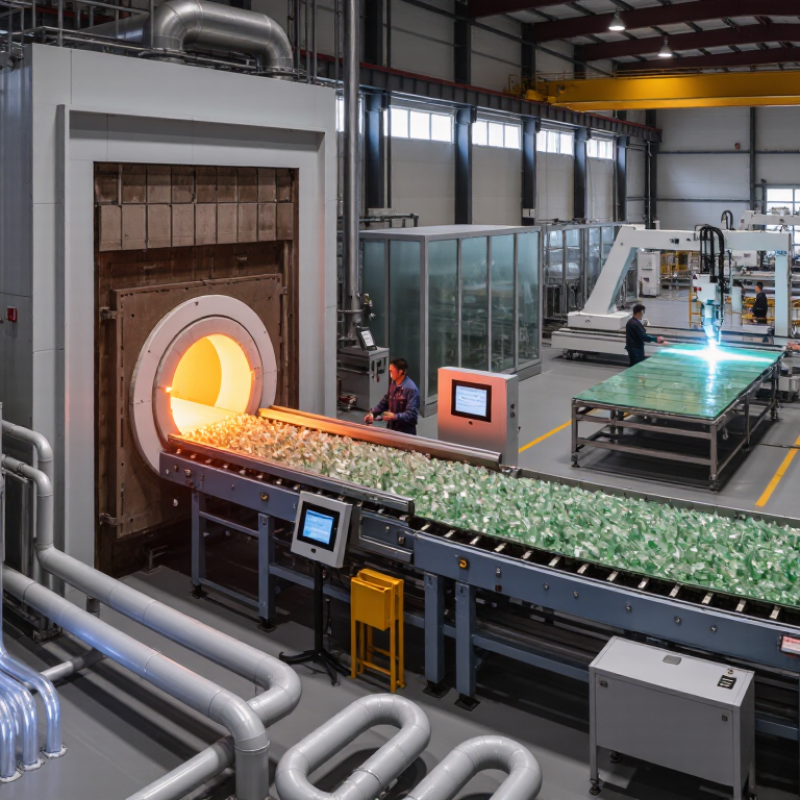
Understanding eco-friendly glass processing in 2026 starts with energy, not decoration. Glass melting commonly consumes most of a plant’s process energy. The European Commission’s JRC Glass Manufacturing BREF identifies melting as the main energy hotspot. Electric boosting, efficient furnace insulation, and stable batch control can reduce wasted heat. Small temperature changes matter. A cold corner creates defects and rework.
Material choices also shape environmental performance. The International Energy Agency reports that recycled input generally needs less energy than virgin raw material. In Europe, recent industry data has placed container-glass recycling above 80 percent. Clean cullet helps furnaces operate more consistently. Contaminated cullet does the opposite. Sorting systems should remove ceramics, metals, and heat-resistant glass before crushing. Workers should inspect screens and storage areas daily.
Measurement remains the difficult part. A factory should track electricity, fuel, water, cullet percentage, defect rates, and emissions per tonne. The Greenhouse Gas Protocol provides a credible structure for calculating direct and purchased-energy emissions. Yet the first calculation may be too optimistic. Idle furnaces, rejected panels, and transport losses are often missed. Better processing is not automatically greener. It requires verified data, trained operators, and repeated checks. Some upgrades will have slow payback. That deserves honest reporting.
| Processing Area | Environmental Dimension | Recommended 2026 Practice | Reference Metric or Target | Operational Benefit | Measurement Method |
|---|---|---|---|---|---|
| Cullet Use | Recycled glass content in the furnace batch | Separate, clean, and return post-consumer and post-industrial glass cullet to the batch whenever suitable for the product specification. | Every 10% increase in cullet can reduce furnace energy demand by approximately 2–3%. | Lower melting energy demand and reduced use of virgin raw materials. | Record cullet input as a percentage of total batch mass and verify contamination levels. |
| Furnace Energy | Energy consumption during melting and refining | Use heat recovery, furnace insulation, optimized combustion control, oxygen-fuel technology where suitable, and continuous energy monitoring. | Track energy in kWh or GJ per tonne of saleable glass. | Reduced fuel consumption, operating cost, and process-related emissions. | Install calibrated electricity, gas, oxygen, and production-mass meters; calculate monthly intensity. |
| Carbon Emissions | Direct and indirect greenhouse-gas emissions | Set a site-level emissions baseline and prioritize furnace efficiency, renewable electricity, lower-carbon fuels, and higher cullet content. | Report Scope 1 and Scope 2 emissions as kg CO2e per tonne of glass. | Improves carbon management and supports transparent environmental reporting. | Use fuel and electricity data with current national or internationally recognized emission factors. |
| Electricity Procurement | Indirect emissions from purchased power | Improve electrical efficiency and procure verified renewable electricity where available, while documenting the accounting method used. | Measure renewable electricity as a percentage of total purchased electricity. | Can reduce market-based Scope 2 emissions and strengthen energy resilience. | Review utility invoices, contractual instruments, meter readings, and renewable-energy certificates. |
| Water Management | Freshwater withdrawal and process discharge | Use closed-loop cooling, filtration, sediment control, and water recirculation for cutting, grinding, and polishing operations. | Track m3 of freshwater withdrawn per tonne of processed glass. | Reduces freshwater demand and limits polluted wastewater discharge. | Use inlet and outlet flow meters; test suspended solids, pH, oils, and other locally regulated parameters. |
| Glass Cutting | Material yield and off-cut generation | Apply computer-controlled nesting, optimize cutting patterns, and return clean off-cuts to the cullet stream. | Monitor yield as saleable glass area or mass divided by input glass area or mass. | Less raw-material loss and lower waste-handling requirements. | Compare purchased sheet mass, finished-product mass, reusable off-cuts, and rejects. |
| Grinding and Polishing | Abrasive consumption, dust, slurry, and energy use | Use efficient tooling, maintain equipment alignment, recirculate process water, and capture dust at the point of generation. | Track abrasive use, electricity, slurry volume, and reject rate per tonne of finished product. | Improves product yield and reduces airborne particulate and slurry waste. | Review equipment logs, filter inspections, water-quality records, and production reports. |
| Coating and Lamination | Chemical use and hazardous-material risk | Use lower-emission formulations where technically appropriate, control application rates, and maintain documented chemical inventories and safety data. | Measure chemical consumption and volatile organic compound emissions per tonne of product where relevant. | Reduces material loss, worker exposure, and process emissions. | Reconcile purchasing, inventory, batch records, ventilation data, and applicable regulatory calculations. |
| Packaging | Packaging material use and transport efficiency | Increase reusable stillages, right-size protective materials, and select recyclable packaging that protects glass from breakage. | Track packaging mass per tonne or square metre of shipped glass. | Reduces packaging waste and damage-related replacement production. | Record packaging weights, return rates, breakage rates, and shipment volumes. |
| Waste Diversion | Landfill disposal and by-product recovery | Segregate glass, metals, cardboard, plastics, refractory materials, sludge, and hazardous waste at source. | Calculate the percentage of total operational waste diverted from landfill. | Improves material recovery and reduces disposal costs. | Use certified waste-transfer records and monthly mass-balance calculations. |
| Product Durability | Service life and replacement frequency | Design and process glass to meet applicable safety, thermal, optical, and durability requirements without unnecessary over-processing. | Monitor nonconformity, breakage, warranty, and replacement rates. | Longer service life can reduce the environmental burden associated with replacement products. | Combine quality-control data, customer returns, field failures, and product testing results. |
| Environmental Management | Governance, compliance, and continual improvement | Maintain documented objectives, legal registers, training, corrective actions, emergency plans, and periodic environmental audits. | Review environmental KPIs at least monthly and complete formal management reviews at planned intervals. | Creates accountability and supports consistent performance improvement. | Use an environmental management system aligned with recognized standards and retain auditable records. |
Furnace melting usually consumes the most energy. Hot doors, idle cycles, and rejected sheets can quietly increase emissions. Measure every stage.
A 10% increase in cullet may reduce melting energy by about 2.5–3%. Results vary between furnaces and products. Clean sorting remains essential.
Ceramics, stones, metals, and heat-resistant glass may cause defects. Mixed colours can also require additional sorting. One small fragment matters.
Track energy, materials, water, emissions, cullet, and rejected products. Record energy per tonne of saleable glass. Monthly utility bills hide weak points.
Insulated furnaces reduce heat loss during long production runs. Variable-speed motors can lower unnecessary electricity use. Heat recovery may preheat materials or process water.
Start with upgrades that offer measurable savings. Replacing old motors may cost less than replacing a furnace. A phased plan is more realistic.
Separate cullet by colour and contamination level. Inspect cracked products before discarding them. Record the cause of every rejection.
Monitor oxygen balance, nitrogen oxides, dust, and carbon dioxide. Preventive maintenance and insulated openings can improve furnace performance. Records may still be incomplete.
Plants can measure rinse water, sludge, and water reuse. Closed-loop treatment may reduce fresh-water demand. Check actual water quality first.
Compare energy, water, cullet, and rejected batches per tonne. Review at least one week of rejected output. The first audit may be imperfect.
In 2026, glass processors are increasingly expected to reduce environmental impact while maintaining product quality, operational efficiency, and regulatory compliance. To Adopt Eco-Friendly Practices in Glass Processing, companies should evaluate every stage of the lifecycle, from raw material sourcing and melting to forming, finishing, packaging, and end-of-life recovery. This assessment helps identify energy consumption, emissions, water use, material losses, and other areas requiring improvement.
A practical sustainability strategy includes selecting energy-efficient furnaces and processing equipment, using lower-impact materials where suitable, and optimizing production settings to reduce resource consumption. Facilities can also minimize waste through better quality control, reuse safe process materials, and establish effective glass recycling systems. Emissions and wastewater should be monitored with appropriate control measures, while performance indicators can track energy use, recovery rates, emissions, and production efficiency. Regular audits, employee training, and continuous improvement programs help ensure that environmental goals remain measurable, achievable, and aligned with responsible industry development.
