Honghe Machinery
Honghe Machinery
Honghe Machinery
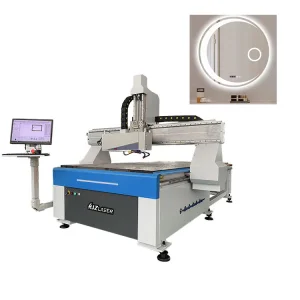
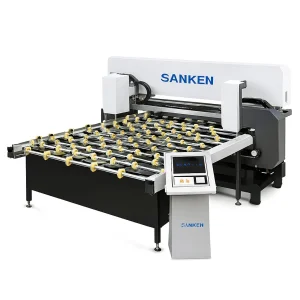
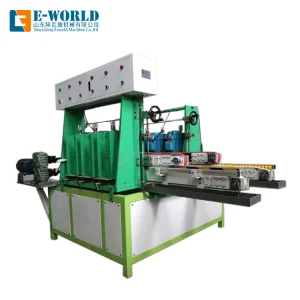
Explore our advanced processing machinery integrated seamlessly with state-of-the-art deionized water washing interfaces.
Analyzing water purity requirements, chemical mechanisms, and technical configurations in modern glass manufacturing.
In high-end glass manufacturing, standard water or simple municipal tap water contains various dissolved minerals such as calcium, magnesium, sodium, silica, and chlorides. If used during the cleaning, edge-grinding, or drilling process, these minerals dry on the glass surface, leaving tiny chemical deposits known as water spots, mineral scale, or haze. In architectural glass, automotive glass, and photovoltaic solar glass production lines, these mineral residues act as points of weakness or optical distortion. The presence of even minute impurities can compromise the bonding of high-performance Low-E coatings, thin-film PV depositions, or specialized screen-printing inks. Glass Deionized (DI) Water Systems remove these mineral salts, producing ultra-pure water with high electrical resistivity (often above 10 MΩ·cm) and exceptionally low conductivity (less than 0.1 µS/cm). This guarantees a completely clean, non-reactive glass substrate, optimizing the success rate of down-stream tempering and sputtering processes.
Selecting the correct water purification methodology dictates the ultimate efficiency, operational expenditure, and output quality of a glass production facility. The table below outlines the core differences between primary treatment protocols used in modern factories.
| Technology | Purification Principle | Conductivity Output | Ideal Application | Operating Cost |
|---|---|---|---|---|
| Reverse Osmosis (RO) | Semi-permeable physical membrane filtration | 2.0 - 10.0 µS/cm | Primary pre-treatment, coarse cleaning | Low to Medium |
| Mixed Bed Deionization (DI) | Ion exchange resin bed (cation & anion) | 0.1 - 1.0 µS/cm | Precision washing, mirror line rinsing | Medium (Requires chemical regeneration) |
| Electrodeionization (EDI) | Continuous electric current demineralization | < 0.1 µS/cm | High-end coated & PV glass washing | Low (Self-regenerating, chemical-free) |
A comprehensive Glass DI Water System typically incorporates a multi-stage purification train. Initially, raw water passes through a pre-treatment filter (sand and activated carbon filters) to remove suspended solids, chlorine, and organic compounds that could foul downstream membranes. Next, a single or double-pass Reverse Osmosis (RO) system eliminates approximately 95-99% of dissolved ions. The final polishing is accomplished via an Ion Exchange Mixed Bed or an Electrodeionization (EDI) module. Continuous monitoring sensors, including inline conductivity meters and flow meters, interface directly with the main PLC control panel of the glass machinery. This ensures real-time quality control: if the water conductivity exceeds the strict threshold required for high-grade glass washing, the system automatically redirects the water back through the purification loop or triggers an alarm, preventing compromised glass from entering the drying section.
Tailored water purification and machinery configurations engineered specifically for specialized global glass applications.

High-end glass cleaning and drying machines significantly improve the efficiency and quality of architectural glass processing through automation and intelligent technology.
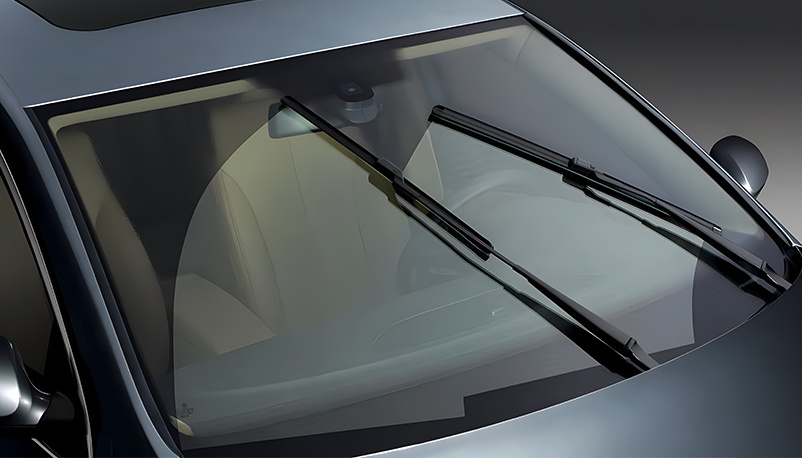
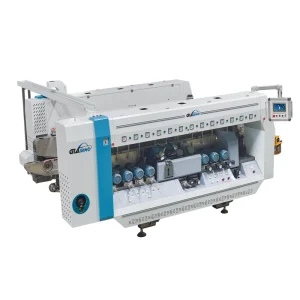
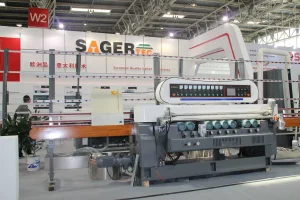
Honghe's intelligent manufacturing solutions have been implemented in glass edge grinding, glass cleaning, digital printing glass cleaning, and architectural glass processing, receiving customer praise for their superior product qualification rate and per capita efficiency.

Honghe's intelligent manufacturing solutions have been implemented in glass edge grinding, glass cleaning, digital printing glass cleaning, and architectural glass processing, receiving customer praise for their superior product qualification rate and per capita efficiency.
Honghe's intelligent manufacturing solutions have been implemented in glass edge grinding, glass cleaning, digital printing glass cleaning, and architectural glass processing, receiving customer praise for their superior product qualification rate and per capita efficiency.
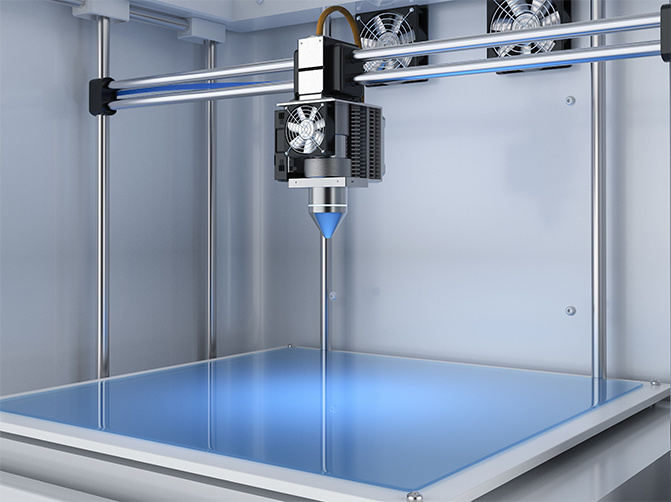
Honghe's intelligent manufacturing solutions have been implemented in the fields of glass edge grinding, glass cleaning, digital printing glass cleaning, and architectural glass processing, receiving customer praise for their superior product qualification rate and per capita efficiency.
Unlocking value through supply chain optimization, smart integrations, and high-efficiency technical standards.
The Yangtze River Delta region, particularly industrial clusters in Jiangsu Province (including Nanjing and Qishi Town), represents the global benchmark for glass machinery and water purification engineering. Sourcing systems from these manufacturing clusters offers clear business and operational advantages:
1. Closed-Loop Zero Liquid Discharge (ZLD) Systems: Environmental regulations globally are clamping down on industrial wastewater discharge. The modern glass processing industry is transitioning rapidly to closed-loop water systems where up to 98% of washing water is captured, filtered, re-deionized, and fed back into the washing chambers. This drastically decreases water utility consumption and avoids heavy discharge fines.
2. Smart IoT-Enabled Water Purity Monitoring: Predictive maintenance is vital to prevent unscheduled line shutdowns. Modern DI systems integrate cloud-linked IoT transmitters that continuously log flow rates, membrane differential pressures, and resin saturation levels. Automated alarms notify operators in advance when filters or resin cartridges need to be exchanged, keeping production schedules uninterrupted.
Engineering precision glass processing machinery and integrated purification systems since 2008.
Established in 2008, Nanjing Honghe Glass Machinery Co., Ltd. integrates research, design, production, sales, and technical services of glass deep-processing machinery. The company is strategically located in the economically developed Qishi Town, Nanjing City, Jiangsu Province. Since its inception, Honghe has gained widespread recognition from industry organizations and government authorities alike.
After years of technical accumulation and continuous engineering innovation, Honghe has secured numerous national invention patents and independent intellectual property rights. The research and development team consistently delivers high-yield solutions, achieving fruitful results that empower manufacturing facilities worldwide. By bridging the gap between precision grinding machinery and high-purity washing lines, Honghe remains at the forefront of the smart glass fabrication industry.
Important criteria for procurement managers selecting industrial-grade glass water treatment systems.
Purchasing a Glass Deionized Water System requires a technical evaluation of variables beyond initial purchase cost. International procurement offices should prioritize the following parameters to ensure system reliability and low lifecycle costs:
Expert insights on maintenance, operation, and specifications of glass factory water purification systems.
Reverse Osmosis (RO) systems utilize physical membranes to block larger ions, organics, and particulates, bringing conductivity down to approximately 2-10 µS/cm. Deionization (DI) systems use chemical resin exchanges or electric currents (EDI) to strip remaining trace minerals, achieving ultrapure water with conductivity below 0.1 µS/cm. RO is commonly used for pre-washing, while DI is used for the critical final rinsing phase before glass is dried and coated.
During tempering, glass is subjected to temperatures exceeding 600°C. If there are mineral residues or salts left on the glass surface from the wash water, these spots will bake into the surface, creating visible white haze, pinholes, and micro-defects. Using DI water prevents these mineral-based cosmetic flaws and structural weaknesses.
The replacement frequency depends heavily on the volume of water processed and the efficiency of the RO pre-treatment stage. In standard single-pass pre-treatment setups, resin beds may need regeneration or replacement every 3 to 6 months. In dual-pass RO and EDI setups, the active regeneration occurs continuously, extending resin module lifespans up to several years.
Yes, industrial Glass DI water systems are designed with modular connections. They can easily be retrofitted to feed the final rinse spray bars of any horizontal or vertical glass washing machine, provided there is sufficient room for the filtration skids and pure water buffer storage tanks.
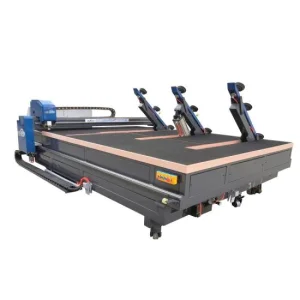
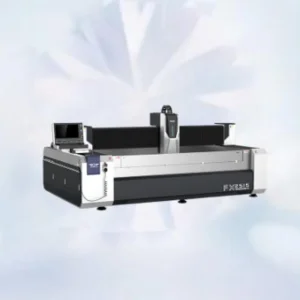
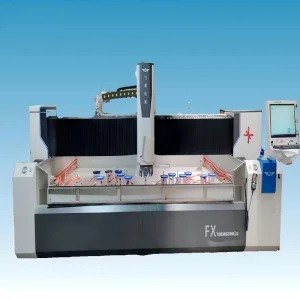
Explore our industrial-grade storage, transportation, cutting, and grinding units for comprehensive factory lines.